
 EN
EN
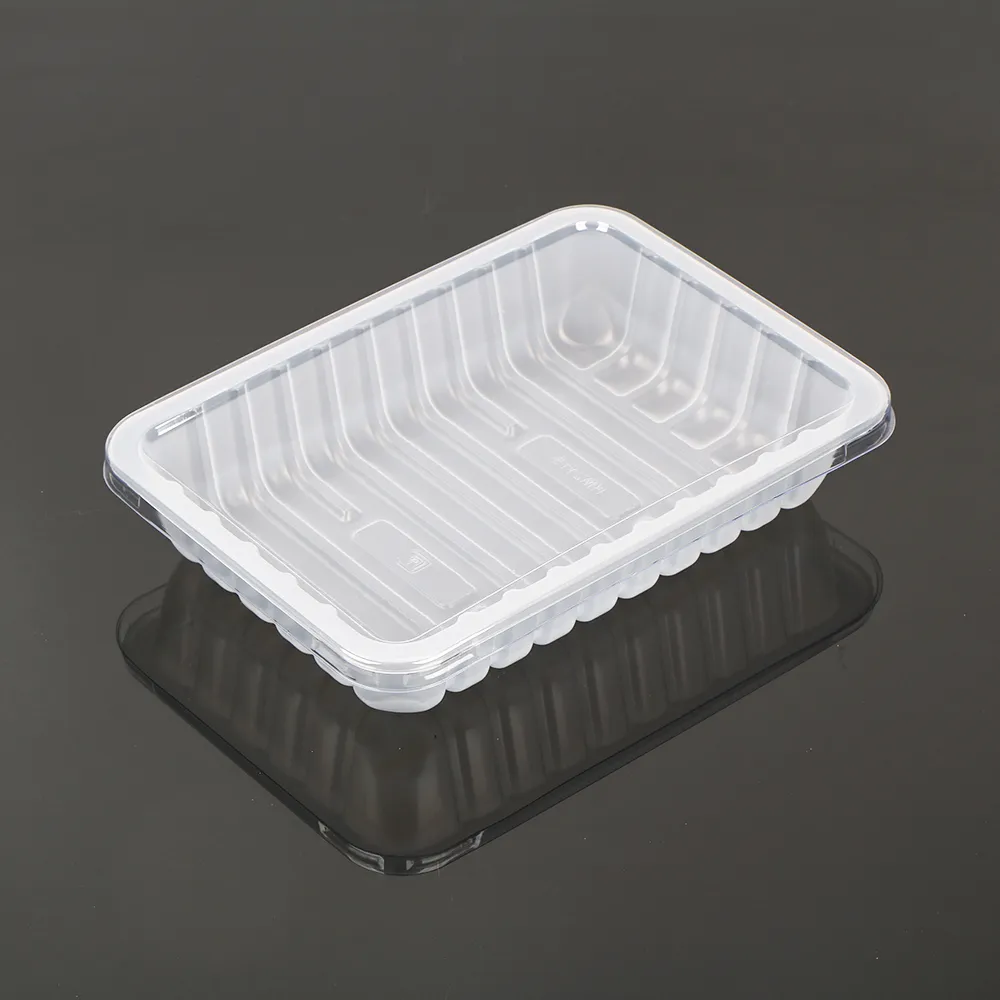
Waste Reduction: Diverting PET from Landfills and Oceans
Closing the Loop on Post-Consumer Plastic Waste
RPET packaging forms the cornerstone of a circular economy by transforming post-consumer PET bottles into high-quality, food-grade packaging materials. The process begins with collection, sorting, and thorough cleaning to remove labels and contaminants; clean PET flakes are then ground, melted, and remolded into new containers. This closed-loop system ensures plastic waste is continuously reused—not discarded. By replacing virgin PET, RPET diverts significant volumes of plastic from landfills, incinerators, and marine environments. Each ton of RPET used prevents approximately 1.5 tons of CO₂ emissions and avoids the equivalent of over 70,000 single-use bottles entering ecosystems annually (2023 sustainability analysis). Recycling PET also consumes up to 75% less energy than virgin production—further shrinking its environmental footprint. Critically, this model reduces demand for fossil-derived virgin plastic while keeping valuable material in productive use, embodying the circular economy principle that waste is a design flaw, not an inevitability.
Global Impact Metrics: Tons of RPET Packaging Diverted Annually
Global adoption of RPET packaging has generated measurable progress in plastic waste reduction. In 2022, the global PET bottle recycling rate reached 57%, with over 10 million tons of post-consumer PET collected and reprocessed—much of it into new packaging. Every ton of RPET packaging produced directly displaces that same ton from landfill or incineration, while delivering parallel climate benefits. Legislative mandates—including the EU’s Single-Use Plastics Directive and national extended producer responsibility (EPR) schemes—combined with rising consumer demand for sustainable packaging, are accelerating investment in collection infrastructure and advanced sorting technologies. As more brands commit to recycled content targets (e.g., 30% rPET by 2025), annual diversion volumes continue to climb—reinforcing a self-reinforcing cycle where scale drives efficiency, and efficiency enables greater circularity.
Carbon Footprint Reduction: RPET Packaging’s Climate Advantage
Lifecycle Emissions: RPET vs. Virgin PET Packaging
Shifting to RPET delivers a decisive climate advantage by slashing greenhouse gas emissions across the product lifecycle. Virgin PET production relies heavily on fossil fuels for crude oil extraction, refining, and polymerization—stages that generate the bulk of its carbon burden. RPET bypasses these most energy-intensive steps entirely, using pre-formed polymer flakes instead. A 2023 meta-analysis of peer-reviewed lifecycle assessments confirms RPET consistently generates 60–70% fewer CO₂-equivalent emissions per kilogram than virgin PET. The table below reflects consensus ranges from recent industry LCAs:
| Lifecycle Stage | Virgin PET (kg CO₂‑eq/kg) | RPET (kg CO₂‑eq/kg) | Emission Reduction |
|---|---|---|---|
| Raw material extraction | 1.2–1.5 | 0.1–0.2 | 80–90% |
| Resin production | 1.0–1.3 | 0.5–0.7 | 40–60% |
| Total cradle‑to‑gate | 2.5–3.0 | 0.8–1.2 | 60–70% |
Data synthesized from 2022–2023 LCA reports (2023).
Even when accounting for collection, sorting, and washing, RPET maintains a substantially lower global warming potential. For brands pursuing science-based targets or net-zero commitments, this emission differential is not incremental—it’s foundational. Choosing RPET decouples packaging growth from rising emissions, turning linear plastic waste into a climate-resilient material loop.
Energy Savings and Fossil Fuel Conservation in RPET Production
RPET production requires up to 79% less primary energy than virgin PET manufacturing, according to a 2022 benchmark report by a leading materials research institute. This dramatic reduction stems from avoiding high-temperature cracking and polycondensation—processes that dominate virgin resin synthesis but are unnecessary when starting with intact PET polymer.
| Process Step | Virgin PET Energy (MJ/kg) | RPET Energy (MJ/kg) | Saving |
|---|---|---|---|
| Feedstock preparation | 35–40 | 5–8 | 80–85% |
| Polymer synthesis | 45–50 | 15–20 | 60–70% |
| Total primary energy | 80–85 | 20–30 | 65–79% |
Benchmark data from 2022 industry analysis.
These energy savings translate directly into fossil fuel conservation: every ton of RPET produced avoids roughly 1.5 barrels of crude oil, reducing both resource depletion and associated geopolitical and ecological risks. Lower thermal and electrical demand also diminishes reliance on coal- and gas-fired power—amplifying downstream climate and air quality benefits. For manufacturers, the dual advantage of reduced energy costs and fossil fuel independence makes RPET not just environmentally sound, but operationally strategic.
Resource Efficiency and Circular Economy Enablement
Recycled PET (RPET) packaging transforms post-consumer plastic into a permanently valuable material stream—reducing pressure on finite resources and proving that circularity is technically viable, economically scalable, and regulatory-ready.
Conserving Crude Oil, Water, and Manufacturing Inputs
Producing RPET directly displaces virgin PET, which is derived from petroleum. Each ton of RPET saves approximately 1.5 barrels of crude oil and 6,000 gallons of process water, according to Plastics Recyclers Europe (2023). These savings cascade through the supply chain: because RPET feedstock already exists as polymer, it eliminates the need for energy-intensive cracking, distillation, and monomer purification—steps responsible for the majority of virgin PET’s natural gas consumption and water use. In water-stressed regions, this reduction in process water demand is especially consequential. By substituting recycled material for crude-based inputs, brand owners and converters significantly shrink their upstream environmental footprint—without compromising performance, safety, or supply chain resilience.
From Collection to Certified Food-Grade RPET Packaging
The RPET journey begins with robust recovery systems that capture post-consumer bottles before they enter incineration or landfill. Collected material undergoes rigorous sorting, washing, flaking, and deep decontamination—including super-cleaning and solid-state polycondensation—to restore intrinsic viscosity and eliminate volatile contaminants. The resulting resin meets stringent purity requirements set by the European Food Safety Authority (EFSA) and U.S. Food and Drug Administration (FDA)—certifying it for direct food contact. In 2023, over 60% of post-consumer PET bottles collected in Europe were upgraded to food-grade RPET pellets (Petcore Europe, 2024), enabling true bottle-to-bottle recycling at scale. This certification chain ensures full traceability and batch-level verification—giving brands the confidence to deploy 100% recycled content in water, beverage, and fresh-food packaging. More than a technical achievement, it represents a systemic shift: one where material integrity, regulatory compliance, and circular ambition converge to keep plastic out of landfills—and in circulation.
FAQ Section
What is RPET packaging?
RPET stands for recycled polyethylene terephthalate, a material made from post-consumer PET bottles. It is used to create high-quality, food-grade packaging in a sustainable way.
How does RPET help reduce plastic waste?
RPET diverts post-consumer plastic from landfills, incineration, and oceans by recycling it into reusable and sustainable packaging. This reduces the need for virgin plastic and mitigates environmental harm.
What are the benefits of switching from virgin PET to RPET?
Using RPET significantly reduces greenhouse gas emissions, energy consumption, and reliance on fossil fuels compared to virgin PET production. It also supports circular economy principles.
How much energy does RPET production save?
RPET production can use up to 79% less primary energy compared to producing virgin PET.
Is RPET packaging safe for food?
Yes, RPET packaging undergoes rigorous decontamination processes to meet food safety standards set by the European Food Safety Authority (EFSA) and U.S. Food and Drug Administration (FDA).