
 EN
EN
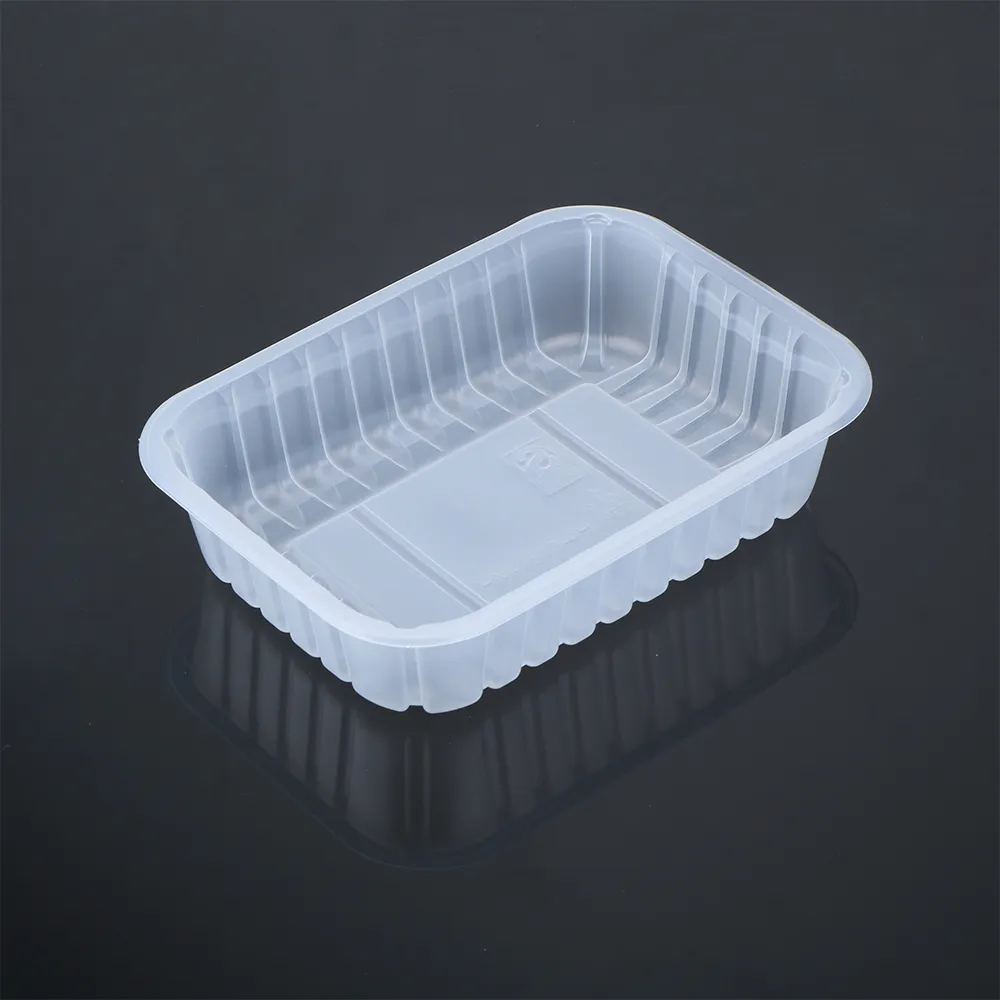
Regulatory Foundations: FDA, USDA/FSIS, and EFSA Standards for Plastic Meat Trays
To ensure plastic meat trays are safe for direct contact with raw meat, manufacturers must comply with stringent regulations from the U.S. Food and Drug Administration (FDA), the U.S. Department of Agriculture’s Food Safety and Inspection Service (USDA/FSIS), and the European Food Safety Authority (EFSA). These frameworks address material safety, migration limits, and facility-specific requirements.
FDA 21 CFR & USDA/FSIS Requirements for Meat-Specific Food Contact Compliance
Under the FDA’s 21 CFR 174–178, food-contact substances used in plastic meat trays must be listed as approved—or covered by a valid Food Contact Notification (FCN) or Generally Recognized as Safe (GRAS) status. Manufacturers must follow Good Manufacturing Practices (GMPs) to prevent contamination during production. For meat contact, the FDA evaluates potential migration of monomers and additives under conditions of high fat and moisture—key accelerants of chemical transfer—using testing protocols that simulate extended refrigerated storage and direct exposure to raw protein. Any new substance requires pre-market approval; existing materials must stay within defined use limits.
The USDA/FSIS adds an operational layer: all plastic meat trays used in federally inspected meat and poultry plants must support the facility’s Hazard Analysis and Critical Control Points (HACCP) plans and Sanitation Standard Operating Procedures (SSOPs). This means trays must withstand repeated sanitization, resist degradation from cleaning chemicals, and not harbor pathogens. FSIS inspectors verify that packaging materials do not compromise product integrity—and because jurisdiction overlaps, a single tray often must satisfy both FDA and USDA criteria simultaneously.
EFSA Migration Limits and Global Harmonization for Fatty, Raw Protein Applications
The European Union’s Regulation (EC) No 1935/2004 establishes the foundational principle that food contact materials—including plastic meat trays—must not transfer constituents to food in quantities that endanger human health or alter its composition. Regulation (EU) No 10/2011 on plastic materials specifies an overall migration limit of 10 mg per square decimeter of surface area. For fatty raw protein, EFSA mandates testing with food simulants that mimic meat’s lipid content—typically 95% ethanol or modified vegetable oil—to ensure no individual substance exceeds its specific migration limit (SML). EFSA’s positive list of authorized monomers and additives is exhaustive; any plastic meat tray sold in the EU must use only approved substances under prescribed conditions of use. Its risk-based evaluation process requires comprehensive toxicological data and migration modeling.
Global harmonization efforts—such as those advanced by the Codex Alimentarius—encourage alignment between regions, but the EU’s standards remain among the most rigorous. Many manufacturers now pursue dual compliance with FDA and EFSA guidelines to simplify international trade, ensuring one certified plastic meat tray can be used safely across markets without retesting.
Material Science: How PP, PET, and PS Plastic Meat Trays Meet Functional Demands
Selecting the right resin for a plastic meat tray is a critical decision that directly impacts product protection and shelf appeal. Each material offers a distinct balance of mechanical properties, thermal resistance, and visual clarity—tailored to different protein applications and supply chain demands.
Polypropylene (PP): Optimal for Fresh/Frozen Meat Due to Thermal Stability and Fat Resistance
Polypropylene (PP) is the dominant material for plastic meat trays intended for both fresh and frozen protein applications. Its high melting point—up to 120°C—supports hot-fill or microwave-reheating scenarios where other plastics might warp. This thermal stability pairs with excellent chemical resistance, preventing structural degradation upon contact with fats and acids inherent in raw meats. For frozen distribution, PP retains impact strength at deep-freeze temperatures, avoiding brittleness and cracking during handling. Its low moisture absorption further safeguards packaging integrity across the cold chain.
PET vs. Polystyrene (PS): Clarity, Rigidity, and Retail Readiness in Plastic Meat Trays
The choice between PET and polystyrene (PS) often reflects retail strategy. PET delivers superior transparency and a high-gloss finish—providing glass-like clarity ideal for showcasing premium red meat cuts. It also offers strong impact resistance and is increasingly available with post-consumer recycled content to meet sustainability goals. In contrast, PS—whether rigid or foam—provides cost-effective rigidity and lightweight cushioning. However, its brittleness and low recycling rates have triggered regulatory restrictions in multiple markets. While PS remains viable for economy-tier products, PET has become the standard for brands prioritizing premium shelf presence and environmental responsibility.
Performance Assurance: Barrier Integrity, Contamination Prevention, and Cold-Chain Reliability
The core value of a food-grade plastic meat tray lies in its ability to function as an active safety barrier—not just a passive container. This performance layer separates compliant packaging from a liability, directly preventing costly product loss and public health risks. Across the cold chain—from wet processing to freezer storage—the tray must maintain absolute chemical stability and physical resilience to safeguard protein integrity.
Chemical Migration Risks in High-Fat or Acidic Meats—and Why Certified Plastic Meat Trays Mitigate Them
Raw protein presents a chemical interface where fatty and acidic compounds actively extract unintended substances from unprotected packaging. Ground beef and marinated pork—high in lipids—can draw out plasticizers or residual monomers, posing serious safety failures. A certified plastic meat tray avoids this by using virgin, high-purity resins engineered for near-zero extractables under aggressive simulants. Comprehensive migration testing—exposing material samples to fatty food simulants at elevated temperatures—validates that total migration stays well below the 10 mg/dm² safety threshold. This certification ensures the tray conditions the product without altering flavor or introducing toxicological hazards—preserving both safety and brand integrity.
Drop Resistance, Stack Strength, and Seal Integrity Across Refrigerated and Frozen Distribution
Physical failure in the cold chain creates a direct pathway for bacterial contamination—making mechanical performance a core safety attribute. A plastic meat tray must endure dual stressors: low-temperature embrittlement and the shocks of automated logistics. At –20°C, a well-designed polypropylene tray maintains high impact resistance—withstanding drops of a 22 kg case from 1.2 meters without cracking. In refrigerated holding, vertical compression strength prevents wall buckling, preserving lidding film seal integrity. A single breach—a hairline crack or compromised seal—collapses the protective modified atmosphere, slashing shelf life by over 50% and increasing pathogen ingress risk. Supply chain analyses show trays engineered specifically for these stacking and impact loads reduce cold-chain failure rates by 34% compared to generic alternatives—directly improving food safety and reducing waste.
FAQ
What regulations govern the safety of plastic meat trays?
Plastic meat trays must comply with FDA (21 CFR 174–178), USDA/FSIS, and EFSA standards, addressing material safety, migration limits, and contamination prevention.
How do plastic meat trays prevent chemical migration?
Certified trays use high-purity resins and undergo migration testing with food simulants to ensure substances stay below safety thresholds, particularly for fatty or acidic meats.
What are the primary materials used in manufacturing plastic meat trays?
Polypropylene (PP), PET, and polystyrene (PS) are commonly used, each offering distinct benefits like thermal stability, transparency, and cost-effectiveness.
Why is physical performance critical for meat trays in the cold chain?
Meat trays must resist embrittlement, drops, and compression to avoid contamination and ensure product integrity throughout refrigerated and frozen distribution.