
 EN
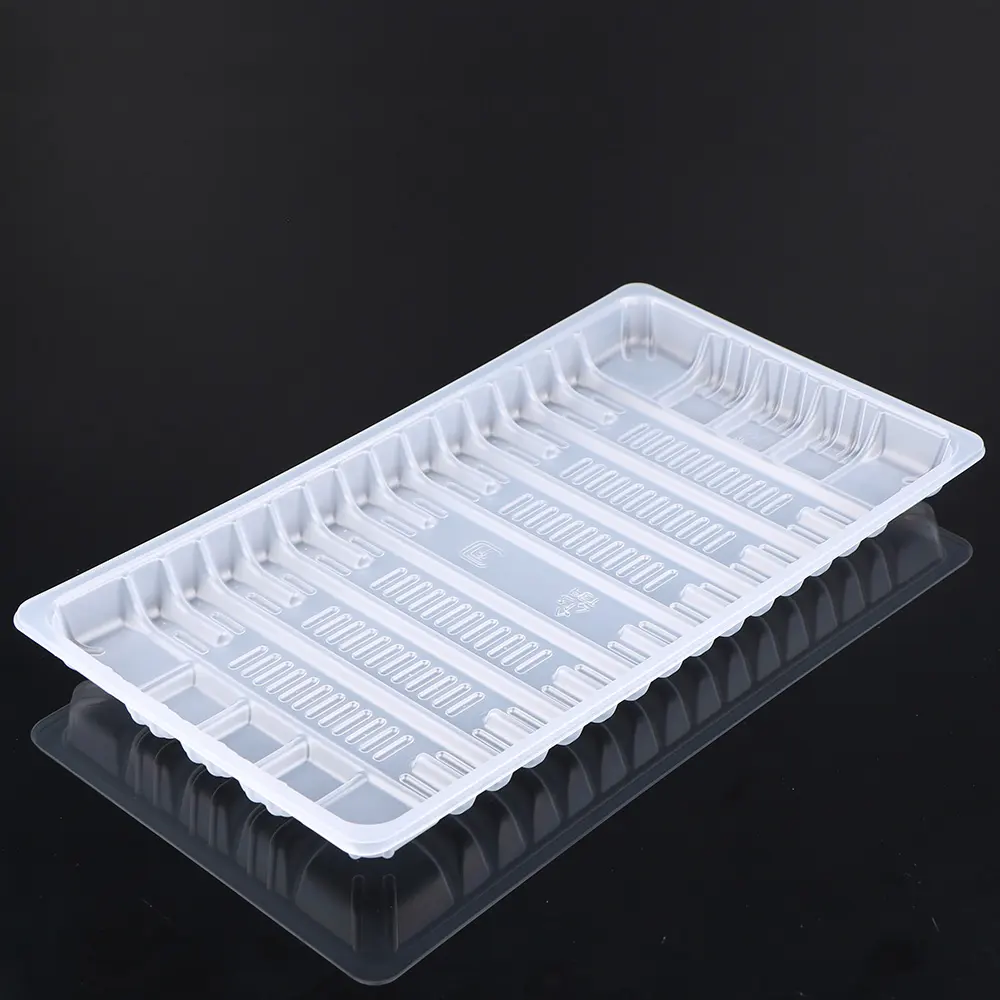
Material Performance: Maintaining Integrity at Sub-Zero Temperatures
Preserving Stiffness, Flexibility, and Toughness Below −18°C
Plastic frozen food packaging must balance stiffness, flexibility, and toughness below −18°C. As temperatures drop, polymer chains lose mobility near their glass transition temperature—causing many standard films to become brittle and lose impact strength. Semi-crystalline polyolefins like low-density polyethylene (LDPE) and metallocene linear low-density polyethylene (mLLDPE) retain ductility in freezing conditions; amorphous resins such as general-purpose polystyrene are far more prone to fracture under minor load. Industry cold-chain evaluations show LDPE-based structures maintain over 80% of room-temperature elongation at −20°C (freezer packaging study 2023).
To prevent stress cracking, converters often blend ethylene vinyl acetate (EVA) or plastomers into polyethylene layers—lowering the brittle point and improving flex-crack resistance. The ideal film remains pliable without becoming limp: excessive stiffness invites cracks at folds and seals, while excessive softness causes stretching and seal creep. Validating tensile elongation at break, flexural modulus, and low-temperature impact toughness together yields a more reliable performance picture than any single metric. Polyethylene-rich webs with 5–15% plastomer are commonly qualified for high post-freeze seal strength (material datasheet review 2024).
Resisting Ice Crystal Puncture and Mechanical Shock During Handling
Frozen food packages face repeated shock, vibration, and contact with sharp protrusions—including ice crystals that form on product surfaces and act as micro-blades during handling. These crystals can score or puncture monolayer films, especially under friction or compression. Puncture resistance depends on both film thickness and resin-level toughness. While LDPE absorbs puncture energy well, it may lack stiffness; coextruding a thin nylon core between PE layers significantly enhances puncture resistance without sacrificing pliability.
Mechanical shock from drops or abrupt conveyor stops concentrates stress at folds and seal corners. A frozen package dropped from 0.8 m can generate forces far exceeding static load capacity—making slow-rate puncture and dynamic dart impact testing essential. Comparative evaluations found coextruded nylon/PE structures delivered 30–45% higher puncture energy than monolayer PE films at −20°C (cold-chain material study 2022). Reinforced gussets, rounded corners, and thicker bottom webs further reduce failure risk. Because freeze–thaw cycling enlarges ice crystals and amplifies internal puncture potential, long-term toughness retention is critical.
Barrier & Environmental Protection: Preventing Freezer Burn and Moisture Damage
In plastic frozen food packaging, barrier performance is the primary defense against quality loss during long-term frozen storage. Moisture control directly determines whether products retain original taste, texture, and visual appeal across distribution and retail display.
Optimizing Moisture Vapor Transmission Rate (MVTR) to Inhibit Freezer Burn
Freezer burn—characterized by white or grayish surface discoloration—is caused by sublimation: ice converting directly to vapor and escaping into the dry freezer environment. The most effective mitigation is selecting materials with low Moisture Vapor Transmission Rate (MVTR), which quantifies water vapor passage through a defined area over 24 hours. Lower MVTR values correlate strongly with better moisture retention, longer shelf life, improved texture preservation, and reduced weight loss in frozen meats, vegetables, and prepared meals.
High-barrier films—such as those incorporating ethylene vinyl alcohol (EVOH), aluminum foil laminates, or metallized layers—dramatically outperform monolayer polyethylene in limiting moisture migration. Vacuum sealing or minimizing headspace air reduces available vapor, while stable freezer temperatures suppress sublimation acceleration caused by thermal cycling. Though freezer burn poses no food safety hazard, it severely degrades eating quality and consumer acceptance.
Managing Internal Condensation and Frost Accumulation in Plastic Frozen Food Packaging
Even with excellent external moisture barriers, internal condensation remains a risk. Temperature fluctuations during transport or storage cause warm, moist air inside the package to contact cold walls—forming condensation that freezes into frost. To minimize this, packaging should combine low-MVTR materials with minimal headspace and hermetic seals. High-barrier structures also serve as thermal buffers, dampening rapid temperature swings that drive internal moisture migration. Removing excess air before sealing limits free water available for frost formation.
Consistent cold chain management—and avoiding partial thaw–refreeze cycles—are equally vital. These practices keep food surfaces dry, prevent clumping in delicate items like berries or diced vegetables, and preserve visual appeal. Excessive internal frost signals packaging or handling failure, eroding consumer trust.
Structural Reliability: Design Elements That Ensure Long-Term Functionality
Long-term performance in plastic frozen food packaging hinges on structural choices resilient to thermal stress, mechanical load, and repeated handling. Two interdependent areas determine whether a package remains intact from filling line to freezer to consumer table.
Multilayer Film Construction and Adhesive Compatibility at Cryogenic Temperatures
Multilayer film construction combines polyolefin sealants, tie resins, and core barrier layers (e.g., EVOH or polyamide) to balance toughness, sealability, and oxygen protection. Yet in frozen applications, the adhesive or tie layer is often the weakest link below −18°C—due to differential thermal contraction among polymers. If the tie resin fails to maintain peel strength at cryogenic temperatures, micro-delamination can occur, compromising barrier integrity and creating pathways for moisture or oxygen ingress. Industry evaluations indicate poorly selected tie layers can lose more than 50% of initial interlayer adhesion after just 30 freeze–thaw cycles (2022).
For reliable performance, converters specify coextruded structures whose adhesives retain at least 80% bond strength at −20°C and remain flexible during high-speed form-fill-seal operations. This approach mitigates cracking, pinholing, and barrier degradation over the package’s full shelf life.
Zipper, Gusset, and Seal Durability in Repeated Freeze–Thaw Cycles
Reclosable zippers, bottom gussets, and heat seals must endure repeated freeze–thaw exposure without functional decline. Ice crystals can accumulate inside zipper profiles—increasing opening force and impairing closure—while frozen product expansion stresses gusset corners and seal edges. Standard polyethylene zippers show average opening force increases of 20–35% after five freeze–thaw cycles; low-temperature zipper resins maintain stable operation with less than 10% variation (2023). Similarly, heat seals made with standard LLDPE sealants may lose 15–25% of initial strength after ten cycles, whereas specialized low-temperature sealants typically retain over 90% (2023).
Design features—including wide seal areas, rounded gusset transitions, and frost-tolerant zipper profiles—reduce leak risk and improve consumer usability across repeated freezer storage.
Regulatory Compliance and Safety Validation for Plastic Frozen Food Packaging
Regulatory compliance for plastic frozen food packaging is not administrative overhead—it is the foundational control system limiting chemical migration from package to food during extended frozen storage. In the United States, the FDA regulates food-contact substances under 21 CFR Parts 174–178, covering Food Contact Notifications (FCNs), Generally Recognized as Safe (GRAS) substances, and Good Manufacturing Practices (GMPs). Approvals include explicit use conditions: temperature limits, food type (e.g., high-fat vs. aqueous), and duration of contact. A resin approved for ambient dry goods may be unsuitable for direct contact with high-fat frozen meals at −18°C.
In the European Union, Regulation (EU) No 10/2011 governs plastic food-contact materials, setting overall migration limits and substance-specific restrictions for monomers and additives. Suppliers must provide declarations of compliance—or certificates of conformance—for each material lot. Absent such documentation, food manufacturers may need to conduct migration testing and retain records for regulatory inspection. Frozen products heighten validation urgency: months-long food–package contact increases opportunity for low-level migration of processing aids, antioxidants, or slip agents.
Practical safety validation therefore rests on three checks:
- Confirm resin identification and verify food-grade status for intended frozen use;
- Obtain written confirmation from the packaging supplier that the structure complies with FDA, USDA, or EU requirements for the specific product and storage temperature;
- Ensure final labeling meets applicable rules—including allergen and nutrition disclosure under the Nutrition Labeling and Education Act (NLEA) or equivalent EU legislation.
Under the Food Safety Modernization Act (FSMA), traceability and preventive controls require accessible packaging compliance records throughout the supply chain. Maintaining current certificates and migration test data reduces recall risk and demonstrates due diligence during audits.
Performance Verification: Industry-Standard Testing for Frozen Packaging
Performance verification confirms that plastic frozen food packaging withstands real-world distribution stresses—not just ambient lab conditions. The most widely accepted protocols originate from ASTM International and the International Safe Transit Association (ISTA). Crucially, validation must use filled packages—not empty containers—because product mass, headspace, and moisture content all influence failure modes.
A practical test sequence includes:
- ASTM D4332: Pre-condition samples at freezer temperatures before mechanical testing;
- ASTM D3103: Evaluate thermal performance of insulated packaging under controlled temperature differentials;
- ASTM D4169: Simulate handling, compression, and vibration during truck and warehouse distribution;
- ASTM D7386: Replicate single-parcel delivery conditions for e-commerce frozen items;
- ASTM D642-25: Assess compression resistance under realistic stacking loads (2025 revision).
Seal strength and puncture resistance must be measured after samples are stabilized at −20°C or lower. Brittle films, zippers, and seals frequently pass at room temperature but fail catastrophically after freeze–thaw exposure. ISTA thermal protocols add value by exposing packages to dynamic external temperature profiles that mirror last-mile delivery variability. Using these standards enables packaging engineers to identify weak points pre-launch—while documented results support food safety audits and retailer compliance requirements.
FAQs
What is the importance of maintaining material integrity at sub-zero temperatures?
Maintaining material integrity ensures that frozen food packaging remains functional and protects food quality below −18°C. This involves balancing stiffness, flexibility, and toughness so the packaging doesn't become brittle or lose its impact strength.
How can freezer burn be prevented in frozen food packaging?
Freezer burn can be mitigated by selecting materials with low Moisture Vapor Transmission Rate (MVTR), vacuum sealing, minimizing headspace air, and maintaining stable freezer temperatures to suppress sublimation.
What role do tie layers play in frozen food packaging?
Tie layers in multilayer films ensure adhesion between different polymer layers. Durable and low-temperature-resistant tie layers help prevent micro-delamination, maintaining barrier integrity and extending the packaging’s longevity.
What tests are standard for assessing frozen food packaging performance?
Common standardized tests include ASTM D4332 for pre-conditioning samples, ASTM D3103 for thermal performance, ASTM D4169 for distribution handling simulations, and ASTM D7386 for single-parcel delivery conditions.
Why is regulatory compliance crucial for frozen food packaging?
Regulatory compliance ensures that packaging materials are food-safe under specific conditions such as prolonged freezing. It helps avoid contamination, ensures quality, and meets legal requirements in the U.S. and EU.
Table of Contents
- Material Performance: Maintaining Integrity at Sub-Zero Temperatures
- Barrier & Environmental Protection: Preventing Freezer Burn and Moisture Damage
- Structural Reliability: Design Elements That Ensure Long-Term Functionality
- Regulatory Compliance and Safety Validation for Plastic Frozen Food Packaging
- Performance Verification: Industry-Standard Testing for Frozen Packaging
- FAQs