
 EN
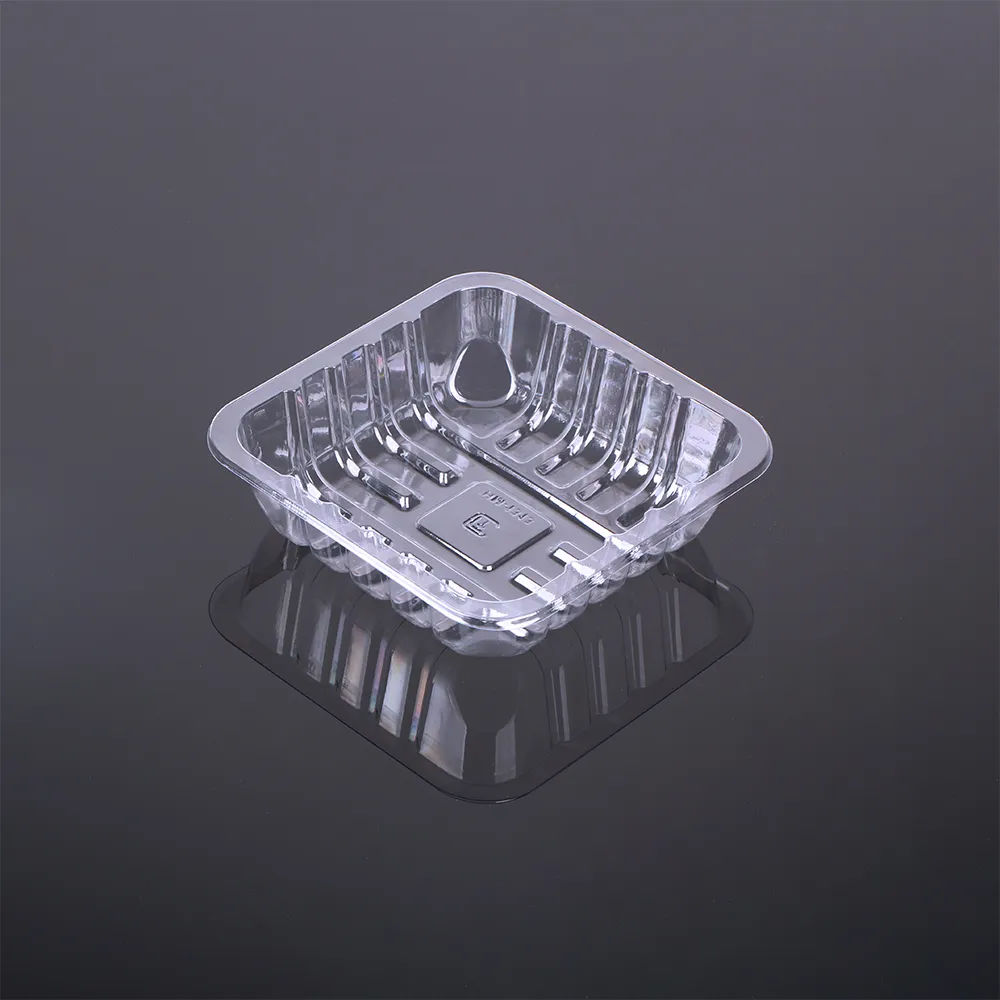
FDA-Approved Food Applications for PET Tray Container
Ready-to-eat meals, fresh salads, and chilled produce: Ideal uses for PET tray container
PET tray containers are FDA-approved for direct food contact in refrigerated, ready-to-eat categories—making them a trusted choice for mixed salads, cut fruit, leafy greens, deli meats, portioned cheeses, chilled desserts, snack packs, and overnight oats. Their rigid, transparent structure protects delicate contents while enabling clear product visibility on shelf or in grab-and-go coolers. A key functional advantage is their barrier performance: PET resists oxygen and moisture ingress, and when paired with modified atmosphere packaging (MAP), it extends shelf life beyond what standard film wraps achieve. Lightweight and shatter-resistant, PET trays reduce freight costs and support high-speed retail and foodservice packaging lines. Smooth interior walls also minimize sauce separation, dressing pooling, and produce crushing during transport.
Because PET’s FDA clearance applies specifically to cold-fill applications—at or below room temperature—the format excels in refrigerated distribution, freezer-to-fridge transitions, and chilled display. It is not intended for hot-fill, steam retort, or oven reheating. For retailers and processors, this means fewer cracked packages, improved shelf presentation, and consistent performance across chilled prepared foods—solidifying PET trays as a practical standard for fresh-cut produce and ready-to-eat meal lines.
Thermal performance boundaries: Why PET tray container excels at refrigerated—but not hot-fill—applications
PET tray containers maintain dimensional stability and seal integrity under refrigerated and ambient conditions, with an upper service limit of approximately 80 °C (176 °F). This thermal ceiling defines their optimal use case: cold-fill operations, chilled distribution, and short-term freezer storage. Above 80 °C, PET softens, warps, or loses seal strength—posing risks to food safety, package integrity, and shelf life. While frozen storage is generally acceptable, rapid temperature cycling should be avoided to prevent stress cracking.
This predictable low-temperature behavior supports reliable automation—denesting, filling, sealing, and labeling—without thermal distortion. As a result, PET trays are widely adopted for salads, dairy-based meals, fresh fruit, and deli items where the cold chain remains uninterrupted. In contrast, applications requiring high-heat processing (e.g., steam retort, hot-fill pasteurization) or microwave-only reheating demand higher-heat alternatives like crystallized PET (CPET) or polypropylene. PET trays are therefore purpose-built for the cold chain: clear, rigid, protective—and intentionally limited to non-hot-fill conditions.
Critical Food Compatibility Limits of PET Tray Container
Fatty, acidic, and alcoholic foods: Migration risks that disqualify PET tray container use
PET trays are not universally compatible with all food types. While FDA-cleared for cold, low-fat, and mildly acidic foods, they carry well-documented migration risks with high-fat, strongly acidic, or high-alcohol products—especially under extended contact or elevated temperatures.
High-fat foods—including oils, butter, fatty meats, and full-fat dressings—can absorb into the PET surface and extract low-molecular-weight oligomers. Prolonged exposure may push total migration toward the EU 10/2011 overall limit of 10 mg/dm². Strongly acidic foods (e.g., vinegar-based marinades, citrus juices, tomato sauces) accelerate hydrolysis of the polymer chain, increasing release of residual acetaldehyde (regulated at ≤6 mg/kg in the EU) and antimony—a catalyst residue with a strict limit of 0.04 mg/kg. Alcoholic foods or sauces containing >10% ethanol by volume can swell the PET matrix, enhancing diffusion of monomers and additives into the food.
For these reasons, PET trays must be avoided for high-fat, strongly acidic, or high-alcohol foods—particularly when storage exceeds refrigeration or reheating is part of the intended use. These scientifically grounded limits ensure PET remains safe, stable, and sensory-neutral for its approved applications.
Regulatory Validation and Migration Testing for PET Tray Container
EU 10/2011 and FDA 21 CFR §177.1630: How compliance is verified for PET tray container
Before entering the market, PET tray containers must undergo rigorous migration testing to verify regulatory compliance. Under EU Regulation (EU) No 10/2011, manufacturers must confirm that overall migration remains below 10 mg/dm² using standardized food simulants: 10% ethanol for aqueous foods, 3% acetic acid for acidic items, and vegetable oil or 95% ethanol for fatty foods. For chilled ready-to-eat meals and fresh salads, testing typically simulates 10 days at 40 °C—reflecting realistic retail and consumer storage conditions. Successful results support a formal Declaration of Compliance.
In the U.S., FDA 21 CFR §177.1630 governs PET’s safe use in food-contact applications. Compliance is verified through extraction studies conducted under the intended time–temperature conditions of use. When recycled PET is incorporated, a validated challenge test must demonstrate that the recycling process effectively removes surrogate contaminants—ensuring no compromise to food safety. This dual regulatory framework confirms PET trays meet globally recognized safety thresholds for refrigerated food contact.
Recycling code 1 implications: Balancing shelf life, recyclability, and chemical resistance in PET tray container
Recycling code 1 identifies PET as one of the most widely collected and mechanically recyclable food-contact plastics. For PET tray containers, this designation enables monomaterial packaging that aligns with existing municipal and commercial recycling streams—supporting brand sustainability goals without sacrificing functionality. However, PET’s chemical resistance is optimized for cold and ambient conditions; performance degrades sharply with heat. Hot-fill processing or thermal spikes increase migration of acetaldehyde and oligomers, potentially exceeding regulatory limits.
Therefore, regulatory compliance hinges on matching the tray to its validated use conditions: chilled, refrigerated, or short ambient shelf life—never hot-fill or reheating. Maintaining a monolayer structure (without barrier adhesives or coatings) further preserves both recyclability and compliance with EU and FDA migration limits. This intentional design balance ensures PET trays remain safe for food, effective in performance, and viable in circular systems.
FAQs
Q: Are PET tray containers safe for freezer storage?
A: Yes, PET tray containers can be used for short-term freezer storage, but rapid temperature cycling should be avoided as it may cause stress cracking.
Q: Can PET tray containers be used for hot-fill or reheating?
A: No, PET tray containers are not suitable for hot-fill, steam retort, or oven reheating due to their limited thermal performance (up to 80°C).
Q: What types of food are PET tray containers not suitable for?
A: They should not be used for high-fat, strongly acidic, or high-alcohol foods since these can cause migration issues, compromising food safety and quality.
Q: Are PET tray containers recyclable?
A: Yes, PET tray containers are widely recyclable under recycling code 1 and are compatible with existing municipal and commercial recycling streams.
Q: How is regulatory compliance for PET trays ensured?
A: Compliance is verified through migration testing under EU Regulation (EU) No 10/2011 and FDA 21 CFR §177.1630. These tests ensure food safety for their intended use conditions.