
 EN
EN
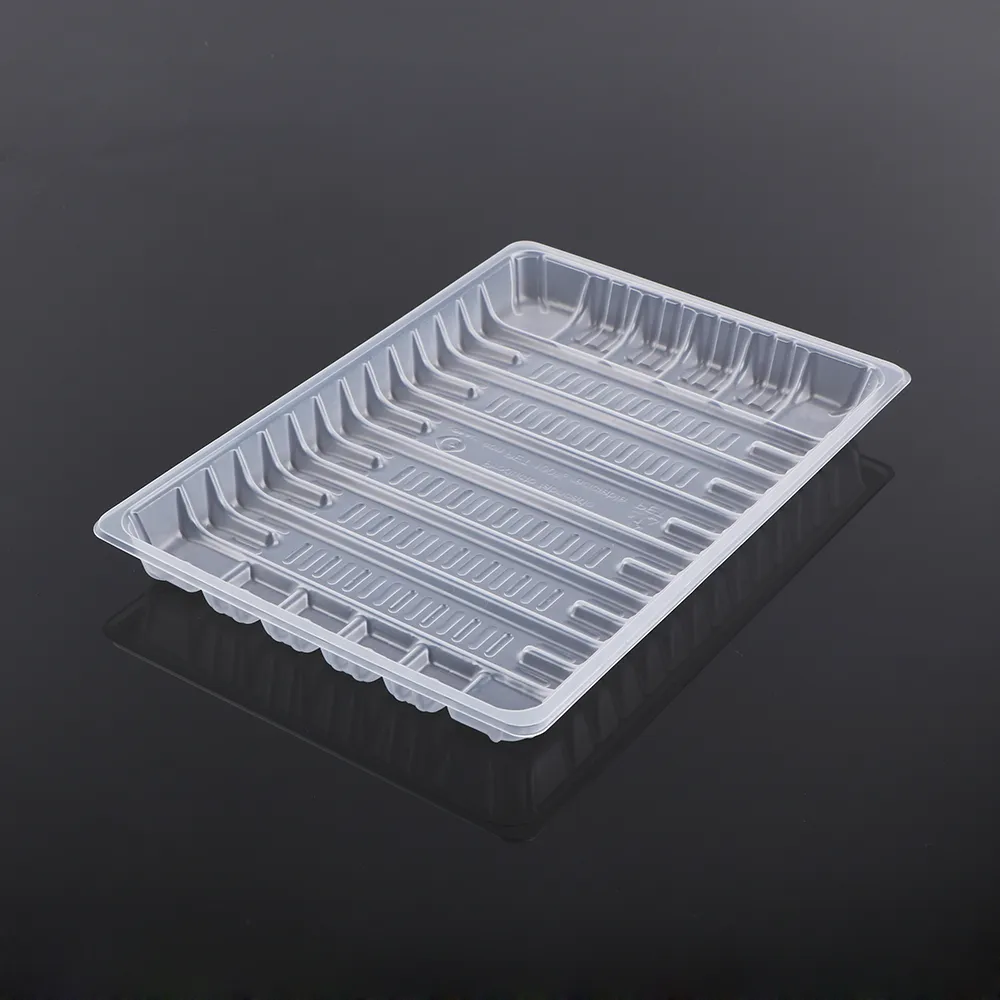
Unmatched Durability and Handling Performance
Impact resistance and structural integrity across storage, transport, and retail handling
Plastic food trays deliver exceptional toughness that safeguards contents from warehouse to checkout. Engineered from high-molecular-weight polymers, they resist cracking under stacking loads of up to 200 kg—a critical advantage in cold-chain logistics. A 2023 study by the Institute of Packaging Logistics found rigid plastic trays cut product damage by 37% compared to traditional corrugated alternatives during multi-drop deliveries. Their inherent flexibility absorbs shocks and vibrations, while consistent wall thickness prevents deformation even after repeated handling. In retail environments—where frequent restocking and customer inspection occur—structural integrity eliminates unsightly dents and preserves shelf appeal. This translates directly into lower waste rates and fewer returns: one global food distributor reported a 22% reduction in loss claims after switching to custom-moulded plastic trays (2022). Resistance to humidity and temperature swings ensures reliable performance across freezer storage and ambient display, reinforcing their role as a cornerstone of dependable supply chains.
Design versatility: clamshells, compartmentalized layouts, and custom-fit plastic food tray geometries
Modern plastic food trays offer unmatched design freedom that optimises both protection and presentation. Clamshell configurations—sealed with a living hinge—provide tamper-evident, resealable enclosures ideal for fresh produce and grab-and-go meals. Compartmentalised trays keep components separate, preventing flavour migration and sogginess while maintaining a convenient single-serve format. Advanced thermoforming enables tight-tolerance, custom-fit geometries that cradle products securely, minimising movement during transit. This precision reduces reliance on secondary cushioning and improves pallet utilisation: a 2023 analysis by a leading packaging engineering firm showed compartmentalised plastic trays improved pallet density by 15% over standard rectangular cartons. Design adaptability also supports brand differentiation—transparent PET trays enhance premium product visibility to drive impulse purchases, while opaque PP trays can be moulded with textured surfaces for a more tactile brand experience. Whether for delicate patisseries or high-volume ready-meals, tailored tray geometry ensures functionality and aesthetics reinforce each other—boosting shelf impact and operational efficiency.
Superior Food Protection Through Advanced Barrier Properties
Oxygen, moisture, and aroma barrier performance of PET and PP plastic food trays
The protective performance of a plastic food tray hinges on its ability to block external elements that degrade quality. Oxygen ingress triggers oxidation—altering taste, causing discoloration, and reducing shelf life of sensitive foods like prepared meats and fresh pasta by up to 50%. A robust moisture barrier is equally vital: it prevents dry items from absorbing humidity and becoming soggy, and stops fresh items from losing essential water content.
PET and PP offer complementary barrier profiles. Standard PP provides a moderate natural moisture barrier but is often co-extruded with EVOH (Ethylene Vinyl Alcohol) to achieve high oxygen resistance—essential for modified atmosphere packaging. PET delivers inherent clarity and a strong native oxygen barrier, particularly valuable for preserving the aroma of premium products like coffee and spices.
| Property | PET Plastic Tray (Typical) | PP Plastic Tray (Enhanced) | Primary Food Protection Benefit |
|---|---|---|---|
| Oxygen Barrier | Good (can be upgraded with coatings) | Moderate (often upgraded with EVOH layer) | Prevents rancidity, preserves flavor, extends shelf life |
| Moisture Barrier | Excellent | Good to Excellent | Maintains product texture and prevents sogginess or drying |
| Aroma Preservation | High | High (with barrier layer) | Ensures flavor integrity and prevents cross-contamination of odors |
Tamper-evident seals and airtight closure systems enhancing safety and shelf life
The closure system transforms a plastic food tray into a secure preservation vessel. Tamper-evident features—such as peelable lidding films and break-away hinge mechanisms—provide clear visual confirmation of product integrity. These are not mere conveniences; they serve as critical safety barriers against intentional or accidental contamination, directly addressing consumer concerns and strengthening brand trust.
Effectiveness depends on achieving an airtight cavity. A hermetic seal on PET or PP works synergistically with the material’s intrinsic barrier properties to lock out atmospheric oxygen and moisture while retaining internal modified atmospheres. This integrated system drives shelf-life extension: for example, a rigid PP tray with a high-barrier peelable lidding film can maintain the quality and safety of chilled ready-meals for several weeks—enabling centralised production and long-distance distribution. The combination of physical protection, verified by tamper evidence, and a controlled internal environment forms the practical foundation of modern food logistics.
Cost Efficiency and Operational Fit Across Supply Chains
Plastic food trays deliver measurable cost savings across the supply chain. Their lightweight construction reduces shipping weight by up to 40% compared to glass or metal alternatives—directly cutting fuel consumption and freight expenses. Uniform, stackable designs integrate seamlessly into automated packaging lines, boosting throughput and lowering labour costs. Durability virtually eliminates in-transit breakage—a common source of waste and rework with rigid alternatives. In cold-chain logistics, thermal stability prevents warping and maintains seal integrity, reducing spoilage and returns. Retailers benefit from efficient shelf stocking and higher product visibility, as consistent tray dimensions simplify planogram compliance. Overall, intelligent material and design choices lower total cost of ownership—freeing resources for growth rather than packaging-related losses.
Material Intelligence: Matching PET, PP, and HDPE to Application Needs
Selecting the optimal plastic food tray material requires precise alignment between product requirements and polymer properties. PET, PP, and HDPE each offer distinct advantages in clarity, thermal resistance, and durability—making them suited to different food categories.
| Material | Key Properties | Typical Food Tray Applications |
|---|---|---|
| PET (Polyethylene Terephthalate) | Crystal-clear, strong, excellent oxygen barrier, rigid | Premium ready-to-eat meals, fresh salads, dual-ovenable trays |
| PP (Polypropylene) | High heat resistance (up to 130°C), flexible, lightweight, moisture barrier | Microwaveable meals, hot-fill soups, chilled-to-hot ready meals |
| HDPE (High-Density Polyethylene) | Opaque, chemical-resistant, durable, high moisture barrier | Dairy products, fresh bakery items, bulk food containers |
PET plastic food trays: clarity, strength, and dual-ovenable functionality for premium ready-to-eat meals
PET trays are the preferred choice when product visibility and structural integrity are non-negotiable. Their amorphous structure delivers glass-like transparency—allowing consumers to assess freshness and quality before purchase. Rigidity protects delicate items like sliced fruit or fresh pasta during automated filling and distribution. Crucially, crystallised PET (CPET) withstands temperatures from –40°C to 220°C, making it the only rigid plastic tray suitable for dual-ovenable (microwave and conventional oven) use. Unlike laminated paperboard, CPET does not absorb oils or sauces—preserving the intended flavour profile of premium meals. This blend of clarity, strength, and thermal resilience has made PET the substrate of choice for leading chilled ready-meal ranges designed to move seamlessly from freezer to oven to table.
PP plastic food trays: heat resistance up to 130°C and seamless chilled-to-hot transitions
PP trays excel where high-temperature tolerance and mechanical resilience are essential. With a melting point near 160°C, PP sustains hot-fill processes up to 130°C without deformation—ideal for microwaveable soups, sauces, and reheatable entrées. Its semi-crystalline structure provides outstanding fatigue resistance, allowing repeated flexing during transport without cracking. PP also offers a natural moisture barrier—helping preserve crispness in freshly baked goods stored at ambient temperatures. A top frozen meal manufacturer uses PP trays for its “heat-and-eat” line because the material transitions instantly from –20°C freezer storage to microwave reheating without embrittlement. Combined with lower density than PET, this robustness reduces shipping weight and cost—cementing PP’s position in high-volume, chilled-to-hot food supply chains.
FAQ
What are the advantages of plastic food trays over traditional alternatives?
Plastic food trays offer unmatched durability, impact resistance, and structural integrity, lowering product damage and waste rates compared to alternatives like corrugated materials. They can also withstand temperature fluctuations, resist moisture, and integrate seamlessly into automated systems.
What are the unique design options available for plastic food trays?
Plastic food trays can be designed as clamshells with tamper-evident seals, compartmentalized layouts to prevent flavor migration, or custom-fit geometries to optimize protection and presentation. Design versatility ensures functionality and branding opportunities.
What materials are commonly used for plastic food trays?
The primary materials include PET, PP, and HDPE. PET offers superior clarity and dual-ovenable functionality, PP provides excellent heat resistance and moisture barriers, and HDPE is highly durable and chemical-resistant for bulk food storage.
How do barrier properties of PET and PP enhance food protection?
PET and PP have complementary barrier properties. PET provides an excellent oxygen barrier and aroma preservation for premium products. PP, co-extruded with EVOH, enhances oxygen resistance to extend shelf life for sensitive foods.
What operational benefits do plastic food trays provide to supply chains?
Plastic trays are lightweight, durable, stackable, and consistent in dimensions. This reduces shipping costs, fuel consumption, in-transit breakage, and spoilage, improving overall cost-efficiency and operational fit across logistics systems.
Table of Contents
- Unmatched Durability and Handling Performance
- Superior Food Protection Through Advanced Barrier Properties
- Cost Efficiency and Operational Fit Across Supply Chains
- Material Intelligence: Matching PET, PP, and HDPE to Application Needs
-
FAQ
- What are the advantages of plastic food trays over traditional alternatives?
- What are the unique design options available for plastic food trays?
- What materials are commonly used for plastic food trays?
- How do barrier properties of PET and PP enhance food protection?
- What operational benefits do plastic food trays provide to supply chains?