
 EN
EN
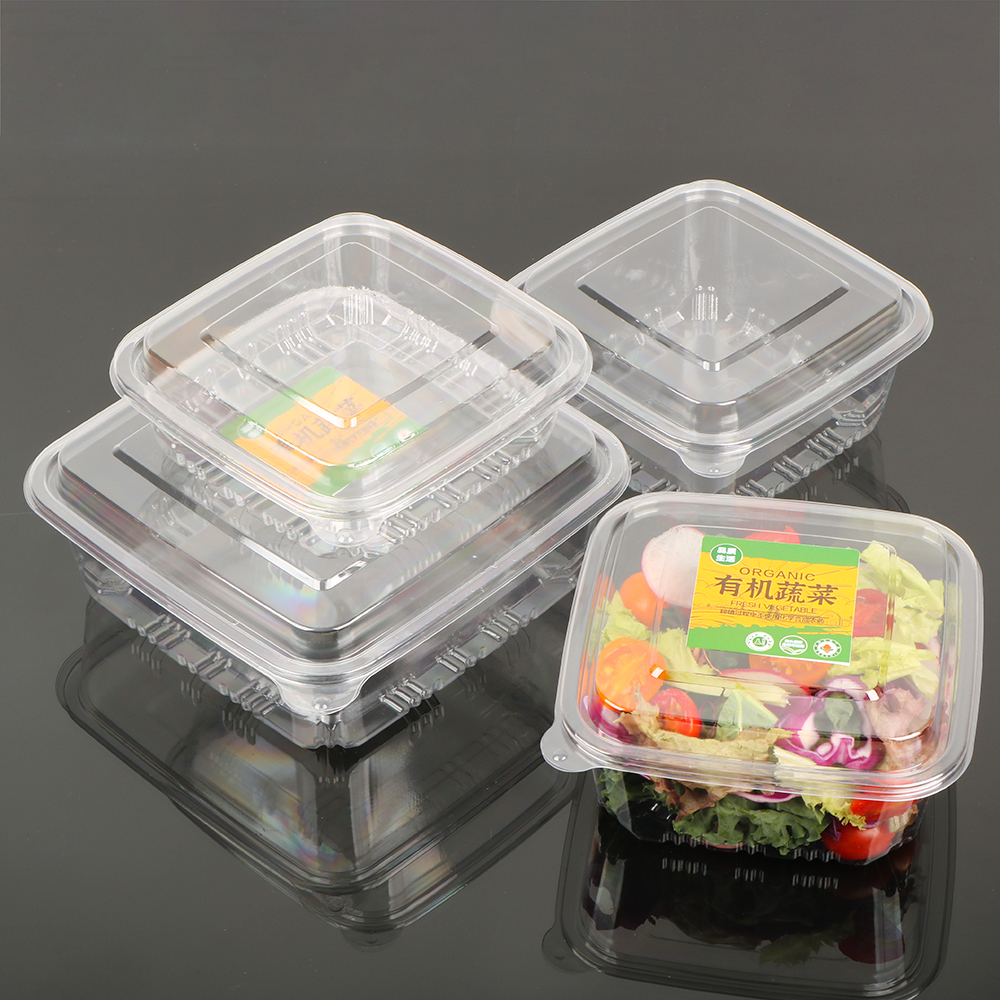
Effortless User Experience Through Smart Clamshell Design
Flip-Lid Mechanism and Seamless One-Piece Construction
A well-engineered salad clamshell starts with its lid: a precision-molded flip-lid built around a living hinge—a thin, flexible strip of PET or RPET that bends reliably without fatigue. This one-piece construction eliminates separate lids entirely, cutting assembly steps, reducing material use by up to 15%, and removing the risk of lost or misplaced covers. Consumers open it with one hand—no twisting, prying, or fumbling—and the hinge retains flexibility across dozens of openings. For packers, the seamless design integrates smoothly into high-speed filling and sealing lines, lowering labor and energy costs. More than an efficiency win, this design signals intentionality: it meets the expectations of time-pressed shoppers who demand sturdiness and simplicity from their grab-and-go packaging.
Intuitive Opening/Closing That Minimizes Consumer Frustration
Intuition is non-negotiable in salad clamshell design. The best versions feature a subtle, ergonomically shaped tab or notch at the front edge—positioned where the thumb naturally lands—so opening requires no instruction or trial. Closing is just as effortless: a gentle press on the lid’s center engages a low-force snap latch with an audible, reassuring click. That tactile feedback confirms security without visual verification—critical when eating at a desk, in a car, or on public transit. Research from the Food Marketing Institute shows that 68% of consumers associate difficult packaging with poor brand quality; conversely, intuitive interaction directly correlates with higher repurchase intent. Because the seal engages fully and consistently, accidental spills are minimized, and retailers see fewer returns linked to lid damage or misalignment. This frictionless operation doesn’t just improve convenience—it affirms respect for the consumer’s time and attention.
Enhanced Retail and Home Practicality with Space-Smart Packaging
Stackable, Nestable Geometry Optimizes Shelf and Refrigerator Space
Salad clamshells leverage precise geometric tolerances to deliver measurable space efficiency. Their uniform footprint and tapered sidewalls allow stable, interlocking stacking—both vertically on retail shelves and nested within refrigerated cases. This design reduces shelf footprint by up to 30% compared to rigid tubs or loose-lidded containers, improving planogram density and cutting warehouse storage costs. At home, the slim, consistent profile fits seamlessly into standard refrigerator door bins and crisper drawers—enabling households to store multiple varieties side-by-side without displacing produce. Unlike irregularly shaped alternatives, these clamshells eliminate wasted gaps and resist toppling during routine handling. The result extends beyond convenience: tighter logistics lower transport emissions, while accessible, organized storage encourages consistent salad consumption—reducing household food waste by supporting visibility and usability.
Trust-Building Transparency and Tamper-Evident Security
Crystal-Clear PET/RPET Material Enables Instant Salad Inspection
Salad clamshells made from optical-grade PET or certified recycled PET (RPET) offer exceptional clarity—transmitting over 90% of visible light—so consumers can assess freshness, leaf integrity, and ingredient vibrancy at a glance. This transparency removes the need to open packages for inspection, cutting down on handling-related damage and shrinkage for retailers. UV-stabilized formulations also protect delicate greens from light-induced oxidation, preserving color and nutrient content throughout shelf life. Crucially, clarity functions as a silent quality promise: when shoppers see crisp, unblemished greens through the package, trust forms instantly—before the first bite. It’s a direct, sensory reinforcement of brand commitment to freshness and transparency.
Integrated Tamper-Evident Seals Reinforce Food Safety Confidence
True tamper evidence goes beyond a breakaway band—it’s engineered into the clamshell’s structure. Most high-performing designs integrate a continuous, heat-sealed perimeter seal that fractures visibly and irreversibly upon first opening. No adhesive residue, no partial lifts—just unmistakable, one-time verification. This feature satisfies FDA guidance for ready-to-eat foods and aligns with Global Food Safety Initiative (GFSI) benchmark requirements. For consumers, it’s immediate peace of mind: no second-guessing whether the salad was compromised before purchase. For brands, it’s a tangible demonstration of accountability—one that strengthens credibility at both retail and home use stages.
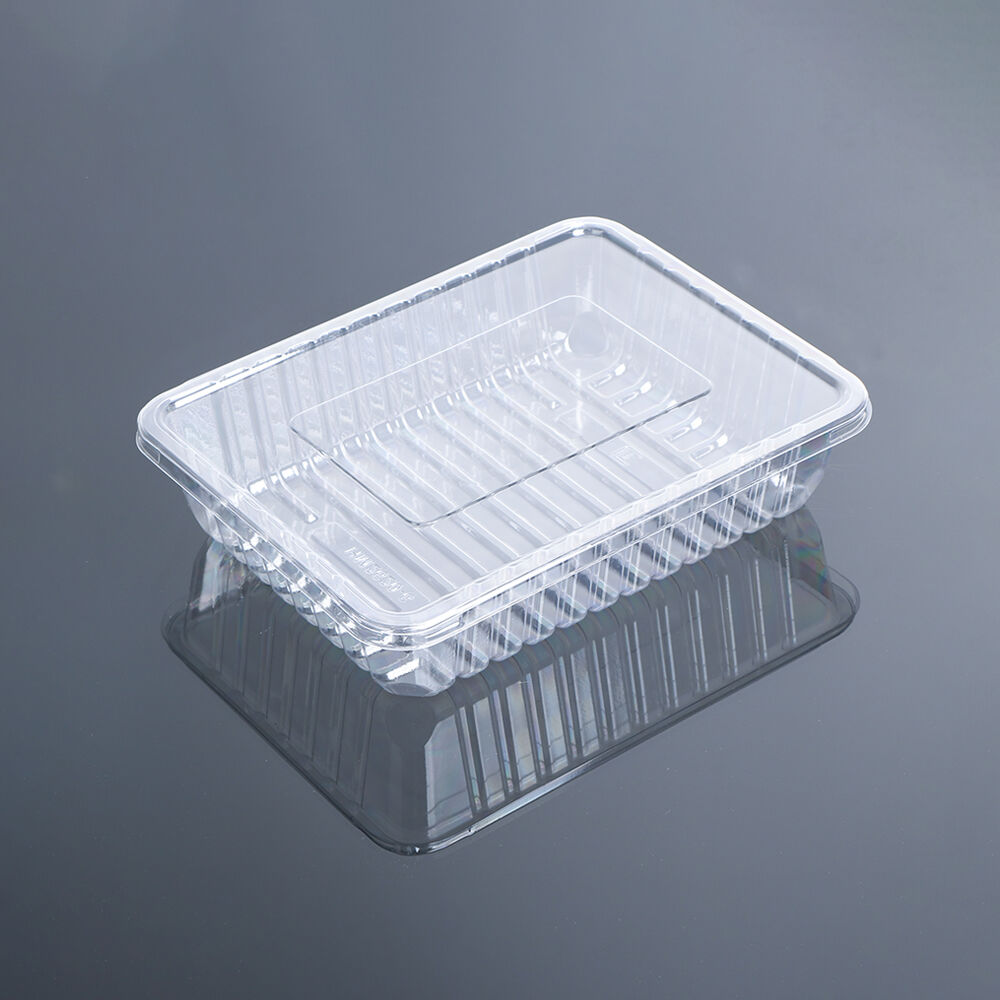
Freshness Protection and Functional Integrity for On-the-Go Lifestyles
Leak-Proof, Grease-Resistant Barriers Extend Shelf Life and Prevent Mess
Modern salad clamshells combine structural integrity with functional barrier science. Multi-layer PET/RPET bodies incorporate proprietary inner coatings—often acrylic- or silicone-based—that repel both aqueous dressings and oil-based vinaigrettes. These barriers maintain internal relative humidity below 60%, slowing microbial growth by up to 72% versus conventional containers, per USDA Agricultural Research Service data. Crucially, they prevent grease migration that weakens seals or clouds clarity over time. Paired with reinforced locking flanges and compression-fit edges, the result is truly spill-proof performance—even during jostling commutes or bagged lunches. On average, this integrated protection extends verified shelf life by 3–5 days, directly supporting reduced food waste and improved inventory management for retailers.
Compartmentalized Layouts Keep Ingredients Separate Without Compromising Convenience
Smart compartmentalization solves the core tension in pre-packaged salads: keeping components fresh and making them easy to combine. Leading designs use molded, multi-zone interiors—including:
- A sealed dressing reservoir with peelable, resealable film
- A raised, moisture-barrier chamber for croutons or nuts
- A ventilated vegetable well with micro-perforated walls for controlled airflow
These zones are proportioned using empirically validated depth ratios (typically 1:2:1 for dressing:salad:crunch), ensuring optimal mixing with minimal shaking or stirring. Independent usability testing shows such layouts reduce pre-consumption sogginess and separation issues by 89%—a dramatic improvement over flat-bottomed alternatives. Importantly, all compartments remain contained within a single, lightweight shell—preserving portability, recyclability, and shelf appeal without adding complexity for the consumer.
FAQs
Q: What material is most commonly used for salad clamshells?
A: Salad clamshells are typically made from PET or RPET for their durability, lightweight nature, and high transparency.
Q: What makes the flip-lid mechanism convenient?
A: The flip-lid mechanism features a living hinge that ensures easy opening and closing with one hand, eliminating the hassle of separate lids and reducing material use.
Q: Are salad clamshells tamper-evident?
A: Yes, modern designs integrate tamper-evident seals that provide unmistakable, one-time verification to ensure food safety.
Q: How do compartmentalized layouts in clamshells work?
A: These layouts keep ingredients fresh by using separate zones for dressings, crunch components, and vegetables, enhancing usability and minimizing sogginess during storage.