
 EN
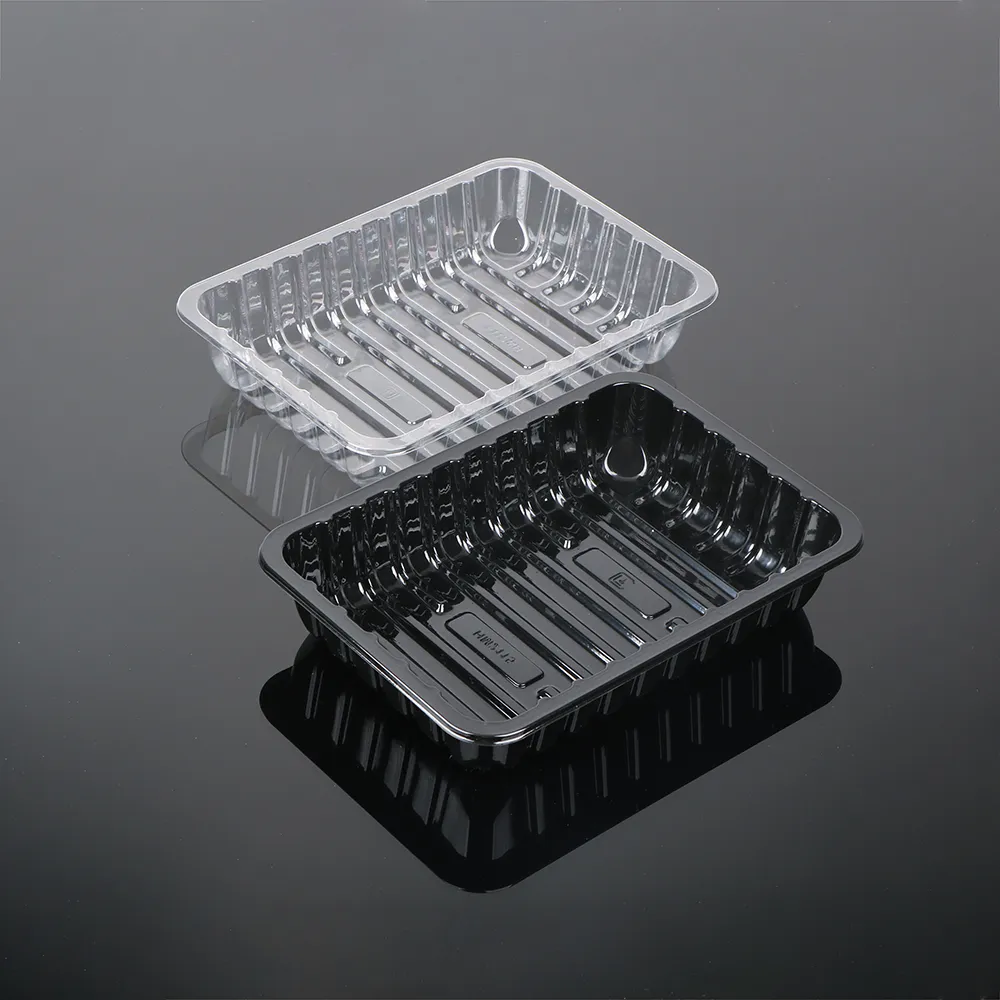
Industrial meal processors, fresh protein suppliers, and high-volume food packaging buyers frequently face product degradation caused by atmospheric oxidation and moisture loss. While standard rigid packaging provides physical containment, it often fails to arrest enzymatic browning, flavor degradation, and microbial growth over extended transport and retail display windows.
Polyethylene Terephthalate (PET) tray containers offer a clear, rigid, and highly impermeable barrier for perishable food products. This technical evaluation analyzes the polymer physics, Oxygen Transmission Rates (OTR), Moisture Vapor Transmission Rates (MVTR), and cleanroom manufacturing controls required to maximize retail shelf-life and minimize store-level markdowns.
Polymer Barrier Physics: Controlling Gas Exchange and Dehydration
The barrier effectiveness of a plastic tray depends on its molecular packing density. PET features a semi-crystalline matrix rich in aromatic rings and ester linkages, creating a tortuous path that restricts the diffusion of gas molecules and volatile organic compounds.
Oxygen Transmission Rate (OTR) and Color Stability
Atmospheric oxygen drives lipid oxidation, rancidity, and pigment degradation in fresh food.
-
Mono-layer APET Trays: Maintain an OTR below 1.5 cc/m²·day under standard ambient conditions (23°C, 0% RH).
-
Multi-Layer / EVOH Co-Extruded PET Trays: Achieve ultra-low OTR performance under 0.05 cc/m²·day when combined with EVOH (ethylene vinyl alcohol) barrier layers or passive oxygen scavenging additives.
-
Impact on Perishables: Low oxygen ingress starves aerobic spoilage organisms like Pseudomonas spp., preserving bright oxymyoglobin color in red meats and slowing enzymatic oxidation in fresh-cut fruits and salads.
Moisture Vapor Transmission Rate (MVTR) and Texture Protection
Uncontrolled moisture transfer compromises the crunch of baked goods and causes drip loss in fresh protein. High-clarity PET trays maintain an MVTR below 0.5 g/m²·day, retaining natural food moisture while preventing external humidity from softening crisp crusts or dry snacks.
Measurable Shelf-Life Extension Across Key Food Categories
Combining high-barrier PET tray geometry with precision heat-sealing or Modified Atmosphere Packaging (MAP) delivers measurable freshness gains across high-risk perishable categories:
| Food Category | Standard Non-Barrier Packaging | High-Barrier PET Tray Packaging | Measurable Shelf-Life Advantage |
| Fresh Pasta | 14 Days (Standard PE Overwrap) | 28 Days (Gas-Flushed PET Tray) | 100% Extension in chilled display |
| Bakery & Croissants | 7 Days (Basic Polybag) | 21 Days (Laminated PET Tray) | 3x Extension with <2% moisture variation |
| Processed Cheese Slices | 30 Days (Non-Barrier Polyolefin) | 65 Days (Oxygen-Scavenging PET) | 35-Day Delay in visible mold onset |
| Fresh Cut Produce | 5-6 Days (Clamshell Container) | 12-14 Days (Sealed PET Barrier Tray) | Up to 133% Increase in retail acceptability |
Thermal Resistance Metrics: APET vs. CPET Formulations
Selecting the correct thermal grade of PET prevents tray distortion during processing, hot-filling, or consumer reheating.
Amorphous PET (APET) for Cold & Ambient Display
APET delivers over 90% optical light transmission and superior structural rigidity (flexural modulus exceeding 2,500 MPa). It resists deformation up to 70°C, making it the industry benchmark for fresh-cut produce, deli meats, bakery items, and cold-chain meal kits requiring maximum shelf visibility.
Crystallized PET (CPET) for Dual-Ovenable Applications
Through controlled thermal crystallization, CPET alters its molecular matrix to withstand continuous temperatures from -40°C up to 220°C. CPET trays allow seamless transition from freezer storage directly into high-wattage microwave reheating or conventional convection ovens without softening, bowing, or leaching.
Automated Line Integration and Cleanroom Quality Standards
High-speed automated food packaging lines demand consistent tray geometry to prevent jam-ups during denesting, gas flushing, heat sealing, and robotic pick-and-place handling.
-
Precision Denesting Lugs: Engineered perimeter lugs prevent tray telescoping and sticking during high-speed automated feeding.
-
ISO 14644-1 Cleanroom Molding: Trays manufactured inside Class 100,000 (ISO Class 8) cleanrooms eliminate airborne dust, micro-particulates, and surface oil contamination prior to food contact.
-
Flange Surface Flatness: Precision thermoforming ensures flange edge flatness within 0.1 mm tolerances, guaranteeing 100% continuous heat seals with peelable or barrier top-lidding films.
-
Global Food Safety Compliance: Fully compliant with US FDA 21 CFR 177.1630, EU Regulation (EC) No 1935/2004, and BRCGS Packaging Material standards for direct food contact.
B2B Procurement Guidelines for High-Barrier Packaging
When sourcing PET food trays for commercial food processing or retail distribution, procurement teams should evaluate three primary criteria:
-
Top-Film Barrier Matching: Ensure the oxygen and water vapor barrier of the tray body matches the specification of the top lidding film to avoid creating a barrier bottleneck.
-
Anti-Fog Coating Quality: Request food-grade anti-fog surface treatments to prevent condensation droplets from obscuring product visibility in chilled retail display cases.
-
Supplier Traceability: Partner with certified packaging manufacturers capable of delivering batch-level material compliance, migration test reports, and raw material origin tracking.
For full technical specifications, custom mold tooling, and bulk supply details on high-barrier packaging options, explore our certified