
 EN
EN
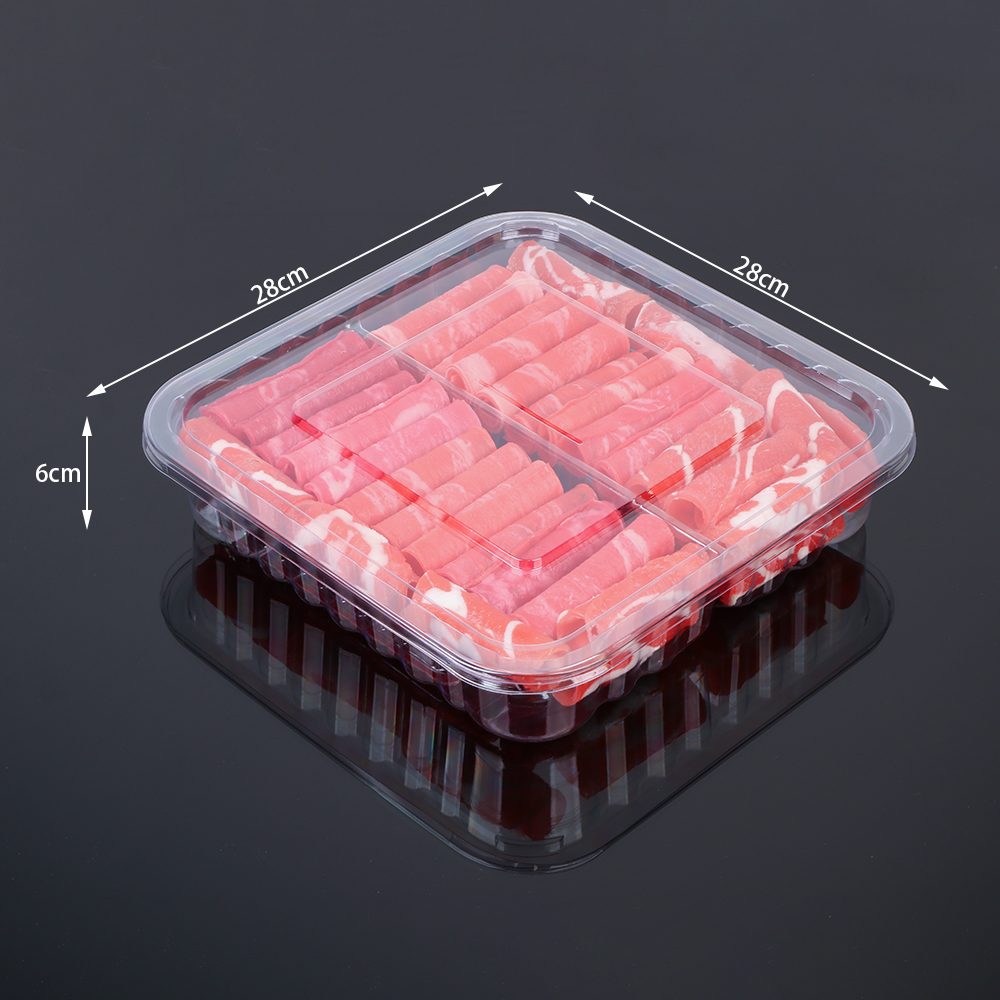
Crystal-Clear Visibility and High-Gloss Finish in Skin Packaging
Optical Clarity and Surface Gloss: How Skin Packaging Maximizes Product Visibility
Skin packaging uses a crystal-clear, flexible film vacuum-sealed directly onto the product and rigid tray—eliminating air gaps that cause light scattering and optical distortion. With light transmission exceeding 90% and haze below 5%, the film delivers a window-like view of food: marbling in meat, leaf veins in lettuce, and golden crust on cheese remain vivid and true. A high-gloss finish enhances this clarity by reflecting light uniformly, generating specular highlights that signal freshness and appetite appeal. Unlike wrinkled lidding films or shrink wraps, skin packaging conforms tightly to every contour—preventing distortion even under bright chiller lighting. This uninterrupted clarity intensifies natural colors: red meats appear deeper, seafood glistens, and ready-to-eat salads look crisp. Consumer behavior research indicates clear, glossy packaging can lift purchase intent by up to 30% compared to cloudy or uneven alternatives—turning a simple tray into a high-impact sales tool.
Refractive Index Matching and Gloss Metrics: The Science Behind Visual Appeal
The visual performance of skin packaging is engineered—not incidental. Premium films are formulated with a refractive index of 1.5–1.6, closely matching the water-rich surfaces of fresh foods. This minimizes internal reflection at the film–food interface, allowing light to pass through with minimal glare or color washout—so consumers perceive true hue and depth. Surface smoothness is quantified using a gloss meter at 60°, where top-tier skin films achieve values above 80 GU (gloss units), significantly surpassing standard lidding films (40–50 GU). This high gloss elevates perceived freshness and shelf presence, reinforcing premium positioning. Combined with low haze and refractive index matching, it creates a “no-barrier” visual effect—validated by sensory studies showing consistent consumer preference for high-gloss, low-haze packaging in freshness and quality ratings.
True-to-Life Presentation Through Skin Packaging Conformity
Tight Conformity Highlights Natural Color, Shape, and Texture of Food
Skin packaging functions like a second skin—pulling ultra-clear, high-gloss film taut over the product to eliminate air pockets and hold items motionless. This conformal fit reveals fine details: steak marbling, fish translucency, and produce plumpness—without distortion. Biaxially oriented polypropylene (BOPP) or polyethylene films provide exceptional clarity and dimensional stability. Crucially, the vacuum seal prevents moisture migration and pooling, preserving surface texture and preventing fogging or blurring. Because oxygen is excluded, myoglobin in red meat stays cherry-red longer, seafood retains its sheen, and enzymatic browning in cut fruits slows markedly. Even irregular items—chicken drumsticks, whole fish—appear uniformly protected and appetizing. Consumer perception studies from 2023 show this fidelity lifts perceived freshness scores by up to 30%, strengthening trust at point of sale.
Case Study: Sliced Deli Meats — Skin Packaging vs. Modified Atmosphere Packaging
A direct comparison of sliced salami and ham revealed compelling advantages for skin packaging. In modified atmosphere packaging (MAP), edge browning and liquid accumulation occurred within days—causing slices to adhere and lose definition. Skin-packaged meats retained a bright, uniform pink hue; each slice remained flat, separated, and visually distinct. The vacuum seal prevented oxidative discoloration while keeping natural juices evenly distributed—no visible pooling. Shelf-life testing confirmed skin packaging extended fresh appearance and aroma to day 16, nearly doubling the display window versus MAP (day 8–10). Retailers reported a 20% reduction in markdowns linked to fading appearance, and consumer purchase intent was 25% higher for skin-packed options. This tight conformity replicates the visual integrity of a butcher’s fresh-cut display—elevating deli meats to premium grab-and-go status.
Preserving Natural Appearance with Skin Packaging’s Oxygen Barrier
Low OTR (<0.5 cc/m²/day) Prevents Oxidative Discoloration in Fresh Meat and Seafood
Skin packaging achieves an oxygen transmission rate (OTR) below 0.5 cc/m²/day—enabled by multilayer films with EVOH or PVDC barrier cores—creating a near-hermetic seal. This benchmark, verified per ASTM F1927, meets stringent requirements for fresh-protein applications. By excluding atmospheric oxygen, it halts myoglobin oxidation in red meat (which turns cherry-red to brown) and retards lipid oxidation in seafood (which causes yellowing and off-odors). The vacuum-driven film contact also eliminates residual air pockets—further shielding surfaces from oxidation. As a result, steaks and salmon fillets retain vibrant color, translucency, and surface moisture well beyond conventional packaging. Since even subtle browning triggers consumer rejection, this barrier function protects both sensory quality and retail viability—reducing waste and reinforcing confidence in freshness and safety.
Skin Packaging’s Impact on Retail Shelf Appeal and Consumer Engagement
Skin packaging transforms retail presentation by delivering a crystal-clear, conformal film that accentuates natural color, texture, and freshness—capturing shopper attention within the critical first few seconds. It extends shelf life for fresh proteins from 8–10 days with MAP to 14–16 days, cutting markdowns and food waste while maintaining a just-packaged appearance. Tamper-evident, leak-proof construction lowers shrinkage and reinforces consumer confidence in product integrity. By merging premium aesthetics with functional freshness protection, skin packaging drives impulse purchases and cultivates long-term brand trust—making it a strategic differentiator for quality-conscious retailers and consumers alike.
Frequently Asked Questions (FAQ)
What is skin packaging?
Skin packaging is a technology that vacuum-seals crystal-clear, high-gloss films over products placed on rigid trays or boards. This packaging eliminates air pockets, maximizes optical clarity, and enhances the product's visual appeal.
How does skin packaging improve shelf life?
Skin packaging utilizes films with a very low oxygen transmission rate (OTR), often under 0.5 cc/m²/day, preventing oxidative discoloration and extending the shelf life of fresh proteins up to 14–16 days.
What are the main advantages of skin packaging compared to other methods?
Compared to methods like modified atmosphere packaging (MAP), skin packaging offers superior visual clarity, better conformity to product contours, reduced oxidative discoloration, and enhanced shelf life, all while preserving natural appearance and freshness.
What types of products can benefit from skin packaging?
Skin packaging is ideal for fresh proteins like meat, seafood, and deli items, as well as ready-to-eat salads and produce—especially when visual appeal and freshness preservation are priorities.
How does high-gloss packaging affect consumer behavior?
High-gloss, crystal-clear packaging significantly enhances product presentation, lifting purchase intent by up to 30%, as consumer studies show a preference for these attributes over cloudy or distorted alternatives.