
 EN
EN
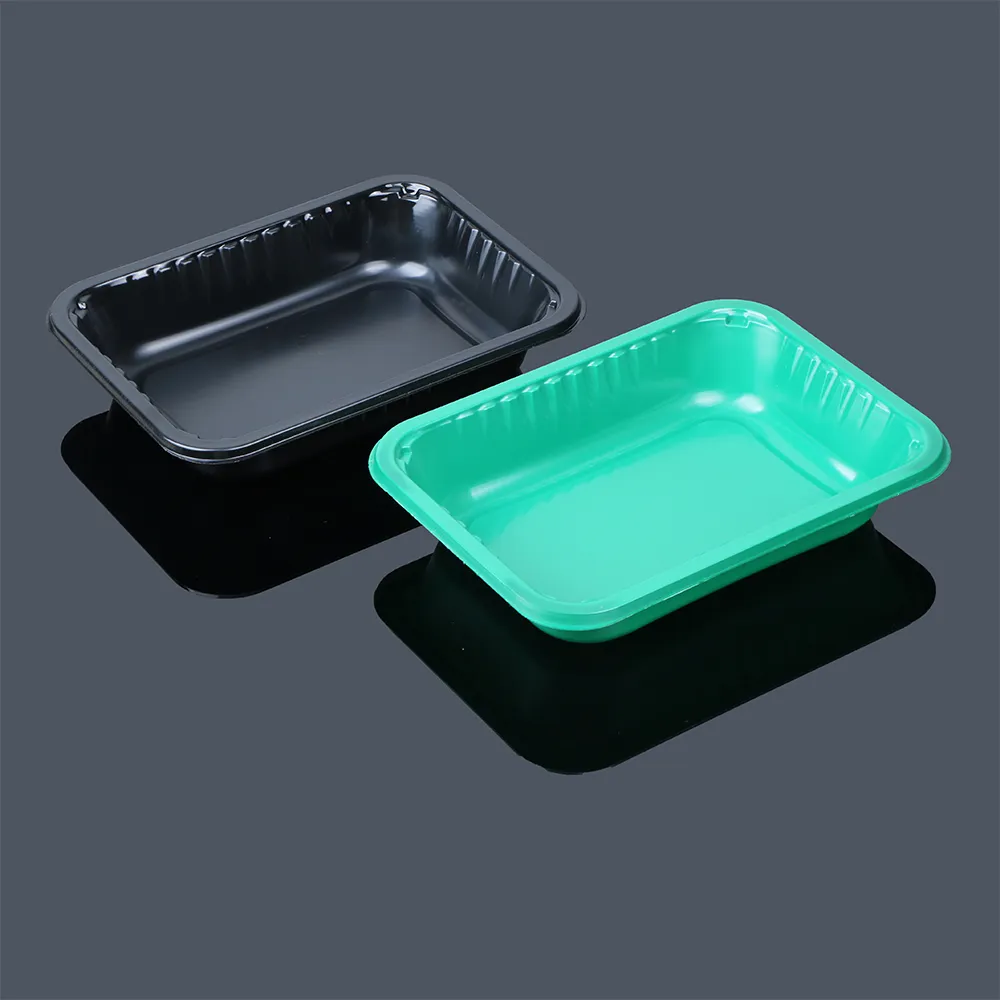
Exceptional Thermal Performance: From Deep Freeze to Hot Oven
Stable Across -40°C to +220°C: Why CPET Trays Excel in Dual-Ovenable Applications
CPET trays are engineered to withstand an exceptionally broad temperature range—from -40°C in deep freezers to +220°C in conventional ovens—making them the preferred choice for dual-ovenable food packaging. Unlike standard plastics that warp or degrade under thermal extremes, crystallized PET maintains dimensional stability and rigidity across this full spectrum. This enables ready meals to move seamlessly from freezer to oven without container transfer, ensuring even cooking and user safety. CPET also performs reliably in microwaves, offering consumers flexibility while eliminating risks of container failure during reheating. For frozen entrees, bake-at-home meals, and meal kits, this predictable thermal behavior is a critical factor in both safety and quality assurance.
Thermal Shock Resistance: Maintaining Integrity in Freezer-to-Oven Workflows
Rapid temperature transitions—such as moving a tray directly from a -18°C freezer into a preheated 200°C oven—induce intense internal stress in most packaging materials. Many plastics crack, delaminate, or leak under such thermal shock. CPET trays, however, are specifically designed to endure these abrupt shifts without structural compromise. The crystallization process enhances the material’s melting point and dimensional stability, enabling it to resist warping and seal failure—even after repeated freeze-thaw cycles followed by high-heat cooking. This resilience is essential in commercial kitchens and food processing facilities where speed and continuity are paramount. A failed tray can spoil an entire batch and pose safety hazards; CPET mitigates those risks, reducing waste, downtime, and variability in meal quality.
Guaranteed Food Safety and Regulatory Compliance with CPET Trays
FDA- and EU-Approved, BPA-Free Formulation for Direct Food Contact
CPET trays are manufactured using virgin or food-grade recycled polyester that complies with stringent FDA (21 CFR 177.1630) and EU (Regulation (EU) No 10/2011) standards for direct food contact. They contain no bisphenol A (BPA) or other endocrine-disrupting substances, ensuring safety for raw, cooked, and reheated foods. These certifications confirm that CPET does not migrate harmful compounds into food under intended use conditions—including freezing, microwave reheating, and conventional oven baking—making it ideal for globally distributed ready-to-cook meals.
Zero Leaching or Seal Failure Under Heat Stress
CPET’s crystalline structure provides superior resistance to heat-induced degradation compared to alternatives like polypropylene (PP). While PP trays may soften, warp, or lose seal adhesion at elevated temperatures, CPET maintains integrity up to 220°C with no measurable leaching or seal failure. Independent testing validates its performance under thermal shock, confirming that packaged meals remain fully sealed throughout heating—preventing contamination, preserving shelf life, and reinforcing consumer trust. This reliability reduces liability exposure for manufacturers and supports consistent brand reputation.
Superior Barrier Properties That Extend Shelf Life and Preserve Quality
CPET trays deliver barrier performance that significantly exceeds standard PET and polypropylene (PP), thanks to their crystalline structure and optimized multi-layer design. They effectively limit oxygen, moisture, and carbon dioxide transmission—key drivers of food spoilage—keeping contents fresher for longer and supporting extended distribution windows.
Outperforming Standard PET and PP: Moisture, Oxygen, and CO₂ Barrier Efficacy
Crystallized PET offers an oxygen transmission rate (OTR) up to five times lower than standard PET and PP. This dramatically slows lipid oxidation and prevents rancidity in fatty foods like meats and prepared meals. Its moisture resistance is equally robust: CPET maintains a water vapor transmission rate (WVTR) below 5 g/m²/day at 38°C and 90% relative humidity—less than half the WVTR of PP (10–15 g/m²/day). In modified-atmosphere or carbonated applications, CPET’s strong CO₂ barrier helps retain internal gas pressure and freshness. Crucially, these barrier properties remain effective across the full -40°C to +220°C range, ensuring protection from freezer storage through final heating—directly extending shelf life by days or weeks, cutting food waste, and improving supply chain efficiency.
Operational Efficiency and Sustainability Advantages of CPET Trays
High Rigidity and Automation Compatibility for High-Speed Packaging Lines
CPET trays offer exceptional rigidity and dimensional stability under mechanical stress—critical attributes for integration with high-speed automated filling, sealing, and stacking systems. Their resistance to warping ensures consistent denesting, precise seal alignment, and reliable downstream handling. This compatibility minimizes line jams, reduces defect rates, and improves overall equipment effectiveness (OEE). As a result, food manufacturers achieve faster throughput, fewer operational interruptions, and greater cost-efficiency in high-volume production environments.
Recyclability and End-of-Life Options in Modern CPET Packaging Systems
Modern CPET trays are fully compatible with existing PET recycling infrastructure, supporting circular economy goals without sacrificing performance. Many incorporate up to 70% post-consumer recycled content, lowering dependence on virgin plastic. Their single-material construction eliminates the need for complex layer separation during sorting and reprocessing. Thinner-gauge designs further reduce material usage and transportation emissions, while non-pigmented variants enable color-free sorting—boosting recycling yield and purity. These features align with evolving regulatory frameworks and rising consumer expectations for sustainable, responsible packaging.
FAQ Section
What is the temperature range CPET trays can withstand?
CPET trays can operate within a temperature range of -40°C to +220°C, making them suitable for freezing, microwaving, and conventional oven baking.
Are CPET trays safe for food contact?
Yes, CPET trays comply with FDA and EU standards for direct food contact, are BPA-free, and do not release harmful substances during use.
Can CPET trays endure thermal shock?
CPET trays are specifically designed to resist cracking, leaking, or warping during rapid transitions between freezing and high heat.
How do CPET trays improve shelf life?
CPET trays offer superior barrier properties that limit oxygen, moisture, and CO₂ transmission, helping preserve food freshness for extended periods.
Are CPET trays recyclable?
Yes, CPET trays are compatible with existing PET recycling systems and can contain up to 70% post-consumer recycled content.