
 EN
EN
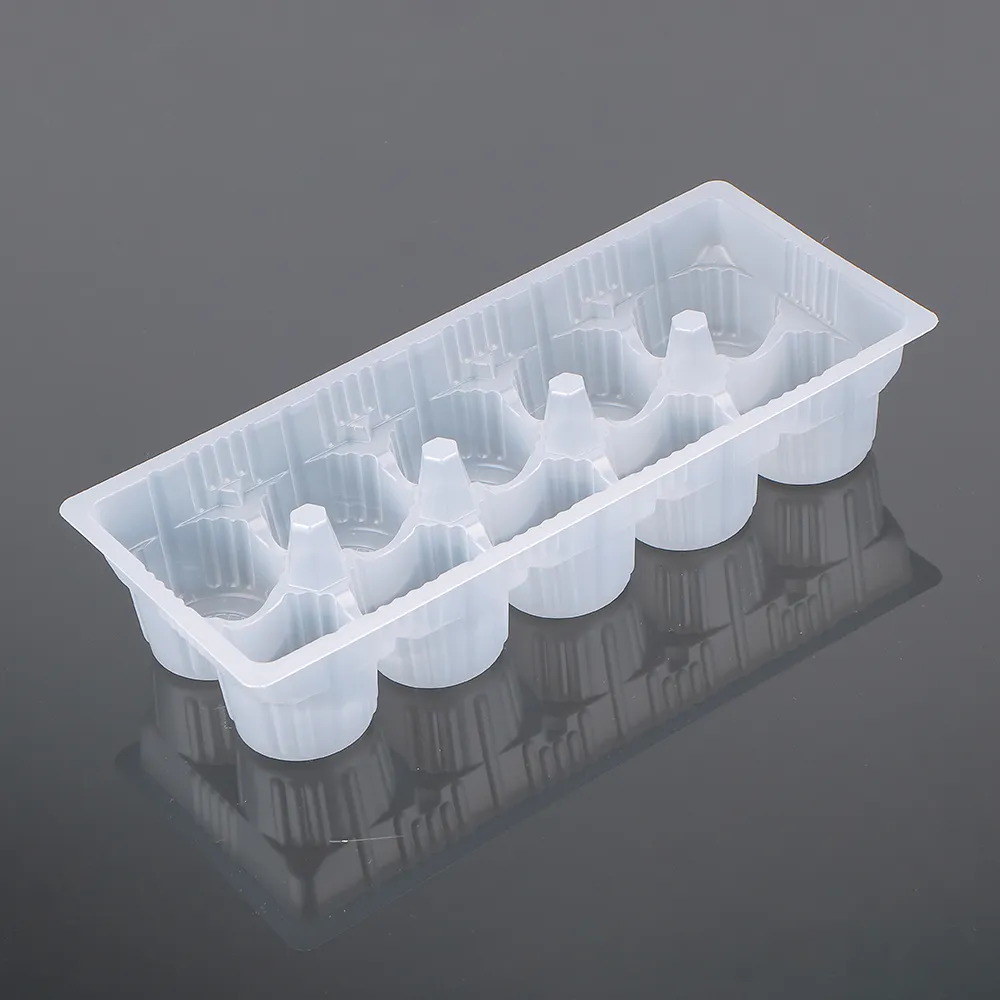
Extending Shelf Life with Advanced Barrier Properties
Advanced plastic meat tray designs incorporate engineered barrier layers—commonly EVOH (ethylene vinyl alcohol)—to drastically reduce oxygen and moisture transmission. This dual-barrier performance prevents lipid oxidation (the primary cause of rancidity and off-flavors) and minimizes moisture loss that leads to weight reduction and surface dryness. By stabilizing the internal atmosphere, the trays also inhibit microbial spoilage, extending shelf life by up to 2–3 times compared to conventional packaging. Their strong thermal stability ensures structural integrity across refrigerated supply chains—critical for compatibility with modified atmosphere packaging (MAP), where precise gas mixtures (O₂, CO₂, N₂) are flushed into the tray to suppress respiration and bacterial growth. Together, these properties make the plastic meat tray a reliable, integrated component for maintaining freshness from processing through retail display.
Ensuring Food Safety Through Regulatory-Compliant Design
Leak-proof, rigid plastic meat tray construction minimizing cross-contamination risks
A rigid plastic meat tray serves as the first physical barrier against pathogen transfer in the supply chain. Leak-proof designs—achieved through precision-molded corners and elevated rim geometries—contain blood and juices without compromising stackability. Polypropylene (PP) and PET trays provide inherent stiffness that resists flexing during handling, preventing micro-cracks or seal failures that could arise from temperature fluctuations below 4°C. This mechanical stability is essential in refrigerated logistics, where flexible alternatives risk deformation and leakage. By eliminating drip points and preserving integrity from pack house to consumer, well-engineered trays directly support Hazard Analysis Critical Control Point (HACCP) plans targeting biological hazards—and help processors and retailers comply with Good Manufacturing Practice (GMP) standards, reducing recall risk.
FDA, EU 10/2011, and BRCGS certification requirements for food-grade plastic meat trays
Global food-contact regulations set non-negotiable safety benchmarks for plastic meat trays. In the U.S., materials must comply with FDA 21 CFR Part 177 for indirect food additives—specifying approved substances and migration limits. The European Union enforces Regulation (EU) No 10/2011, mandating an overall migration limit (OML) of 10 mg/dm² and strict specific migration limits (SMLs) for monomers like styrene and bisphenol A. Meanwhile, the BRCGS Global Standard for Packaging Materials requires certified production lines to undergo rigorous factory audits, raw material testing, and full traceability—often serving as a mandatory procurement condition for major retailers. Annual third-party testing further verifies that trays do not impart off-flavors or toxic substances into fatty or acidic meats. These overlapping frameworks ensure that a single tray simultaneously satisfies mechanical safety (leak resistance), chemical safety (migration control), and operational accountability—delivering consistent consumer protection across the value chain.
Optimizing Retail and Supply Chain Efficiency
Case-ready packaging transforms meat logistics—from processor to shelf—by embedding operational intelligence into the plastic meat tray itself. Integrated barcode scanning, standardized dimensions, and rigid, leak-proof construction streamline warehouse sorting, pallet stacking, and point-of-sale checkout. Retailers eliminate in-store repackaging labor, while automated distribution systems benefit from consistent geometry and dimensional reliability—reducing handling errors and accelerating replenishment cycles.
Case-ready functionality: scannable, stackable, and display-ready plastic meat tray formats
Modern plastic meat trays are engineered around three functional pillars: scannability, stackability, and display-readiness. Barcodes printed directly on the tray or top film enable rapid scanning at receiving docks and checkout—cutting inventory tracking time by up to 40%. Interlocking edges and uniform base dimensions maximize pallet density and support automated loading into refrigerated display cases without manual realignment. Clear, anti-fog lidding maintains visual appeal and product visibility, while eliminating back-room repackaging reduces human contact and associated contamination risks. Standardized formats also simplify reverse logistics for damaged returns. The result is a unified solution that supports efficient operations from dock to shelf—enhancing speed, accuracy, and food safety in parallel.
Real-World Performance: Data-Backed Shelf Life Advantages
Controlled studies validate the tangible impact of high-barrier plastic meat trays on shelf life. A 2023 trial by the Food Packaging Institute found that fresh beef sealed in trays with oxygen-scavenging barrier films maintained acceptable color and microbial counts for 18 days—more than triple the 5-day shelf life observed with traditional overwrap. The critical factor was oxygen transmission rates held consistently below 10 cm³/m²/day, a threshold proven to slow both lipid oxidation and aerobic bacterial growth. Similar testing with pork and poultry demonstrated shelf life extensions of 10–14 days under standard cold-chain conditions. These peer-validated metrics provide retailers and processors with objective, actionable evidence—confirming that rigid, high-barrier plastic meat trays deliver measurable, scalable improvements in freshness, waste reduction, and margin protection.
FAQ Section
What are plastic meat trays made of?
Plastic meat trays are typically made from Polypropylene (PP) or Polyethylene Terephthalate (PET), both of which offer stiffness and thermal stability.
How do advanced barrier layers extend food shelf life?
Advanced barrier layers, such as EVOH, minimize oxygen and moisture transmission, preventing lipid oxidation and microbial growth, thereby extending shelf life.
What certifications ensure safety for plastic meat trays?
Plastic meat trays comply with certifications like FDA 21 CFR Part 177, EU Regulation No 10/2011, and BRCGS Global Standards for Packaging Materials.
What are case-ready trays?
Case-ready trays are designed for scannability, stackability, and display-readiness, optimizing retail and supply chain efficiency.
How do meat trays impact logistics and supply chains?
They unify dimensions, enhance pallet sorting, and streamline warehouse handling, reducing manual errors and accelerating operational cycles.