
 EN
EN
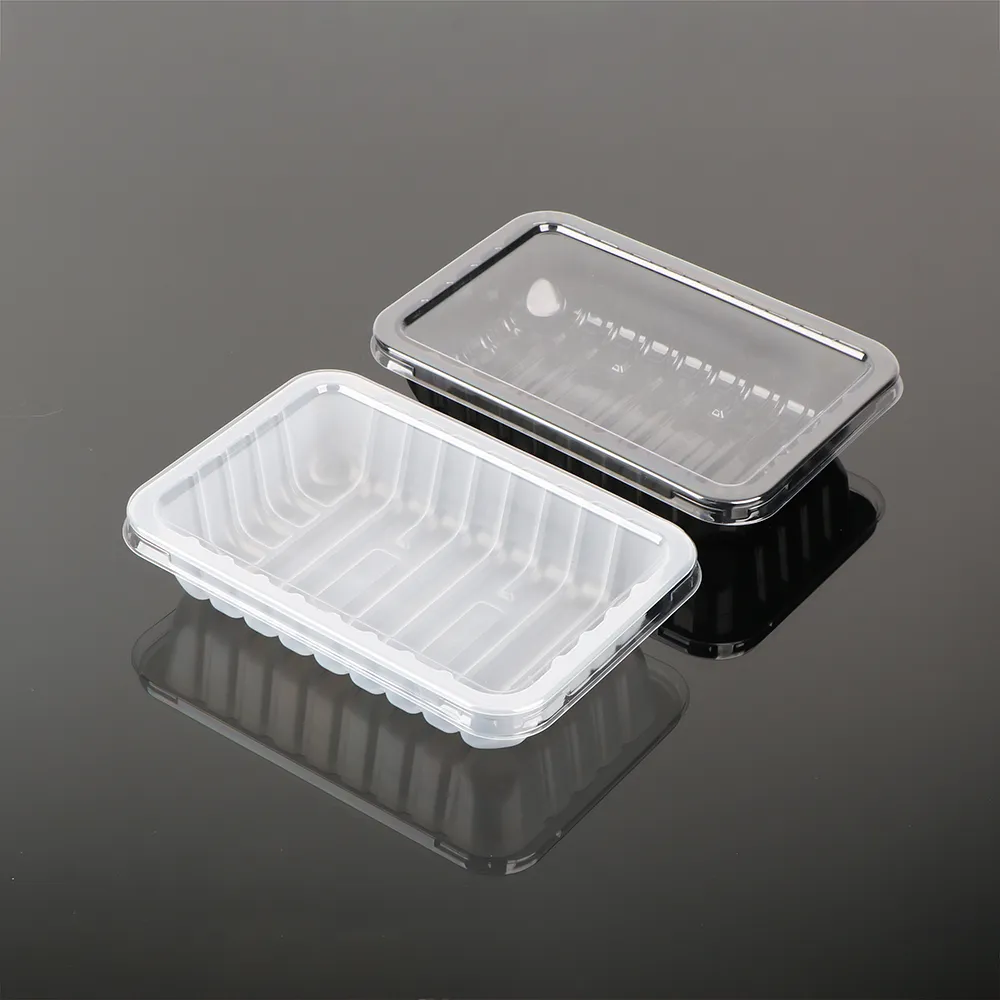
What Is Skin Packaging and How Does It Work?
Skin packaging uses a flexible plastic film that is heated and then drawn tightly around a product, sealing it to a rigid substrate such as a tray or board. When combined with vacuum, the film conforms precisely to every contour of the item—eliminating air gaps and creating a tamper-evident, airtight package. This method extends shelf life by blocking oxygen and moisture ingress while preserving visual appeal and structural integrity.
The science of conformal sealing: How vacuum skin packaging eliminates headspace and locks in freshness
The key to skin packaging’s protective power is conformal sealing. After the product is placed on a tray, a film is heated until pliable. A vacuum pump then removes all air from the package, causing the film to collapse onto the product and adhere tightly to the tray’s flange. Without headspace, oxygen cannot circulate around the food—slowing oxidation and microbial growth. The tight seal also prevents moisture loss, preserving weight, texture, and juiciness. This controlled internal environment keeps fresh items like meat, fish, and cheese at peak quality for days longer than conventional wraps.
Core components: Tray, film, vacuum, and heat seal — their roles in creating an oxygen-free barrier
Four elements work together to form a reliable oxygen-free barrier. The tray, typically made from rigid plastic or food-grade cardboard, provides structural support and serves as the bottom sealing surface. The film, often a multi-layer laminate incorporating ethylene-vinyl alcohol (EVOH), delivers high oxygen-barrier performance and strong heat-seal integrity. The vacuum system evacuates air from the package, generating negative pressure that pulls the film snugly against the product. Finally, the heat seal bonds the film to the tray’s flange, locking the vacuum inside. Precise matching of these components to product geometry, weight, and storage conditions ensures consistent, long-lasting protection.
Skin Packaging’s Dual-Barrier Protection for Food Safety
Oxygen barrier performance: EVOH and PE laminates inhibit oxidation and microbial growth
Skin packaging leverages advanced film laminates—particularly those containing EVOH—to create a robust oxygen barrier. EVOH reduces O₂ permeability to ≤0.2 cm³/m²/day under standard test conditions, significantly outperforming conventional PVC films. This near-complete oxygen exclusion slows aerobic spoilage and extends freshness by 30–40% compared to traditional alternatives. Polyethylene (PE) layers enhance puncture resistance and seal strength. Thermal forming achieves up to 99.98% headspace elimination—inducing microbial stasis in common pathogens such as Pseudomonas spp., as confirmed in peer-reviewed research published in Poultry Science.
| Performance Factor | Conventional MAP | Skin Packaging | Improvement |
|---|---|---|---|
| O₂ Transmission Rate | ~10–20 cm³/m²/day | <0.5 cm³/m²/day | 95–98% reduction |
| Aerobic Plate Count Stability | 5–7 days | 14–21 days | 3× extension (FSIS 2023) |
This synergy enables processors to meet global retail distribution timelines without preservatives or supplemental CO₂ flushing.
Moisture retention and contaminant exclusion: Preserving texture, weight, and microbiological integrity
Vacuum skin packaging’s conformal seal forms a highly effective secondary barrier against humidity ingress and dehydration. Research shows pork loins lose less than 0.5% mass after 28 days of refrigerated storage—compared to 3–4% shrinkage in modified atmosphere packaging (MAP), per Meat Science Journal (2022). This moisture retention sustains critical quality attributes:
- Juiciness retention of 85–92% (versus 60–70% in traditional packaging)
- Drip loss minimized to <1.5 mL per kg
- Visual appeal preserved through inhibition of surface desiccation
Because the film adheres fully to both product and tray, condensation buildup—and the cross-contamination risk it poses—is virtually eliminated. When integrated with HACCP protocols, this construction supports a 99.8% reduction potential for Listeria monocytogenes, according to the International Commission on Microbiological Specifications for Foods (ICMSF 2021). With no microperforations, the packaging blocks particulate contaminants down to 5 µm—a vital safeguard for allergen control in shared-production facilities.
Proven Shelf Life Extension Across Key Food Categories
Red meat case study: 14–21 extra days of freshness vs. modified atmosphere packaging (MAP)
Skin packaging consistently delivers 14–21 additional days of refrigerated shelf life for red meat compared to modified atmosphere packaging. At 4°C, pork maintains sensory and microbiological quality far longer due to complete oxygen removal—unlike MAP, which relies on partial gas displacement and retains residual headspace that accelerates lipid oxidation and myoglobin deterioration. Tight film adhesion restricts microbial access while maintaining moisture content, keeping weight loss under 5%. Independent testing confirms lower total viable counts (TVC) and Enterobacteriaceae levels throughout extended display periods—validating its role in reducing spoilage and waste across supply chains.
Seafood and deli applications: Measured reductions in Listeria monocytogenes and aerobic plate counts
Seafood and ready-to-eat deli products benefit significantly from skin packaging’s hermetic seal. Controlled studies show:
- Aerobic plate counts reduced by 1.5–2 log CFU/g in refrigerated fish fillets
- Listeria monocytogenes suppressed below detection limits for ≥30 days
- Yeast and mold growth inhibited by 90% versus traditional overwrap formats
By eliminating residual oxygen pockets, the packaging functionally starves facultative anaerobes. Simultaneously, moisture retention between 96–98% preserves delicate textures in seafood. Third-party validations confirm that when paired with sanitized processing environments, skin packaging achieves non-detect pathogen levels at production exit points—outperforming permeable packaging systems in regulatory challenge studies.
Why Food Brands Choose Skin Packaging Despite Higher Upfront Costs
Food brands strategically invest in skin packaging despite higher material costs because it delivers measurable operational savings and consumer value that offset initial expenditures. Key drivers include:
- Extended shelf life: Products exposed to oxygen decay 5–10× faster than those protected by skin packaging—reducing spoilage, recalls, and waste disposal expenses while enabling broader distribution reach.
- Consolidated shipping costs: Vacuum-sealed packages occupy less cooler space than bulkier alternatives, lowering transport fees.
- Labor efficiencies: Extended freshness allows flexible production scheduling, easing staffing strain during seasonal demand peaks.
- Enhanced price premiums: Premium presentation and full product visibility support retailer price increases of up to 15%.
- Sustainability compliance: Reduced material usage—cutting tray and clamshell volume by 30–50%—and lightweight films align with circular economy mandates and evolving retailer sustainability requirements.
FAQs
What is skin packaging?
Skin packaging is a method of sealing a product using heated plastic film that conforms tightly to the product and a rigid substrate, creating an airtight and tamper-evident package.
How does vacuum skin packaging extend shelf life?
Vacuum skin packaging eliminates headspace, blocking oxygen and moisture, which slows oxidation and microbial growth, thereby preserving the product’s freshness for longer periods.
What are the benefits of skin packaging compared to modified atmosphere packaging (MAP)?
Skin packaging provides better oxygen barrier performance, longer shelf life, moisture retention, and enhanced visual appeal compared to MAP. It also reduces spoilage and waste.
What types of food benefit most from skin packaging?
Skin packaging is especially beneficial for meats, seafood, deli items, and cheeses due to its ability to preserve texture, weight, and prevent contamination.
Why do food brands invest in skin packaging despite higher costs?
Food brands choose skin packaging for its operational savings, extended shelf life, improved shipping efficiency, sustainability compliance, and ability to command price premiums.