
 EN
EN
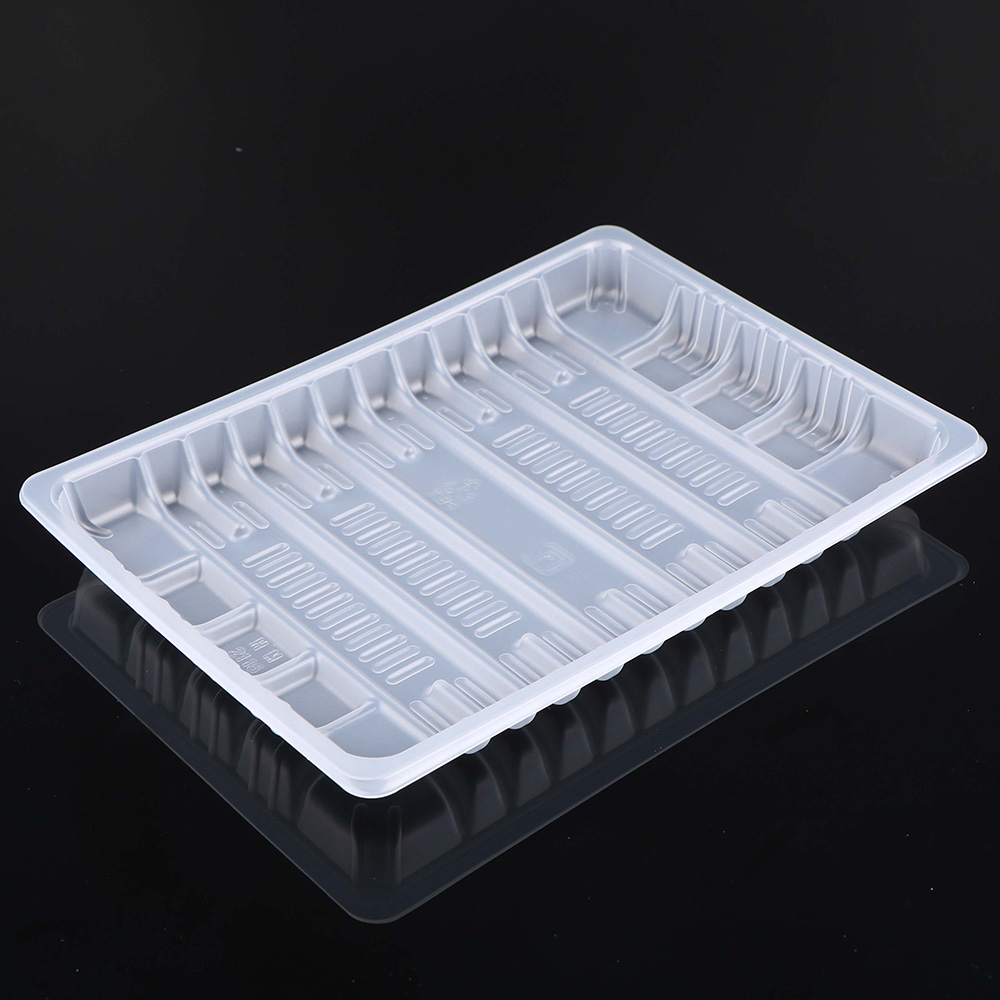
What Is a VSP Tray and How Does It Work?
VSP tray defined: The rigid, food-grade substrate enabling vacuum skin packaging
A VSP (Vacuum Skin Packaging) tray is a rigid, food-grade container—typically made of recyclable PET, PP, or sustainable moulded fibre—that serves as the foundational substrate for vacuum skin packaging. Designed to hold perishable products like meats, seafood, and ready-to-eat meals, these trays provide structural integrity while meeting FDA and EU food-contact safety standards. Their engineered geometry ensures uniform heat distribution during sealing and maximises barrier performance against oxygen and moisture ingress.
Vacuum activation process: Film conforming to product contour under suction on the VSP tray
During packaging, the VSP tray—loaded with product—enters a sealing chamber where a preheated, multilayer thermoplastic film (e.g., EVOH or PA/PE laminate) is placed over it. Intense vacuum suction removes air from the chamber, softening the film and drawing it tightly over both the product and tray flange. The result is a precise, airtight “second-skin” seal that:
- Reduces residual oxygen to <0.1%
- Prevents purge loss and freezer burn
- Minimises headspace—cutting material use by up to 25% versus traditional lidding
This hermetic, form-fitting enclosure preserves freshness while enhancing retail visibility and shelf appeal.
VSP Tray Benefits for Food Safety, Quality, and Shelf Life
Extended shelf life: 3–5× longer refrigerated storage vs. conventional packaging
VSP trays significantly extend refrigerated shelf life for proteins and RTE meals by creating an anaerobic environment that suppresses aerobic pathogen growth—including Listeria monocytogenes and Salmonella. USDA (2022) data confirms refrigerated storage of vacuum-skin-packed beef and poultry reaches 21–35 days—3–5× longer than overwrapped or MAP alternatives. Crucially, the tray’s rigidity prevents purge leakage, eliminating the liquid migration that accelerates enzymatic spoilage and microbial proliferation in softer packaging formats.
Superior quality retention: Blocking aerobic spoilage, oxidation, and moisture loss
The conformal film acts as a dual-function barrier: physically excluding aerobic microbes while inhibiting lipid oxidation—the leading cause of off-flavours and surface browning in red meat and seafood. Independent testing shows VSP-packaged products retain up to 40% more moisture than conventionally wrapped counterparts, preserving juiciness, texture, and visual appeal. This robust seal also buffers against temperature fluctuations and transit vibration, reducing in-distribution waste without compromising sensory or microbiological quality.
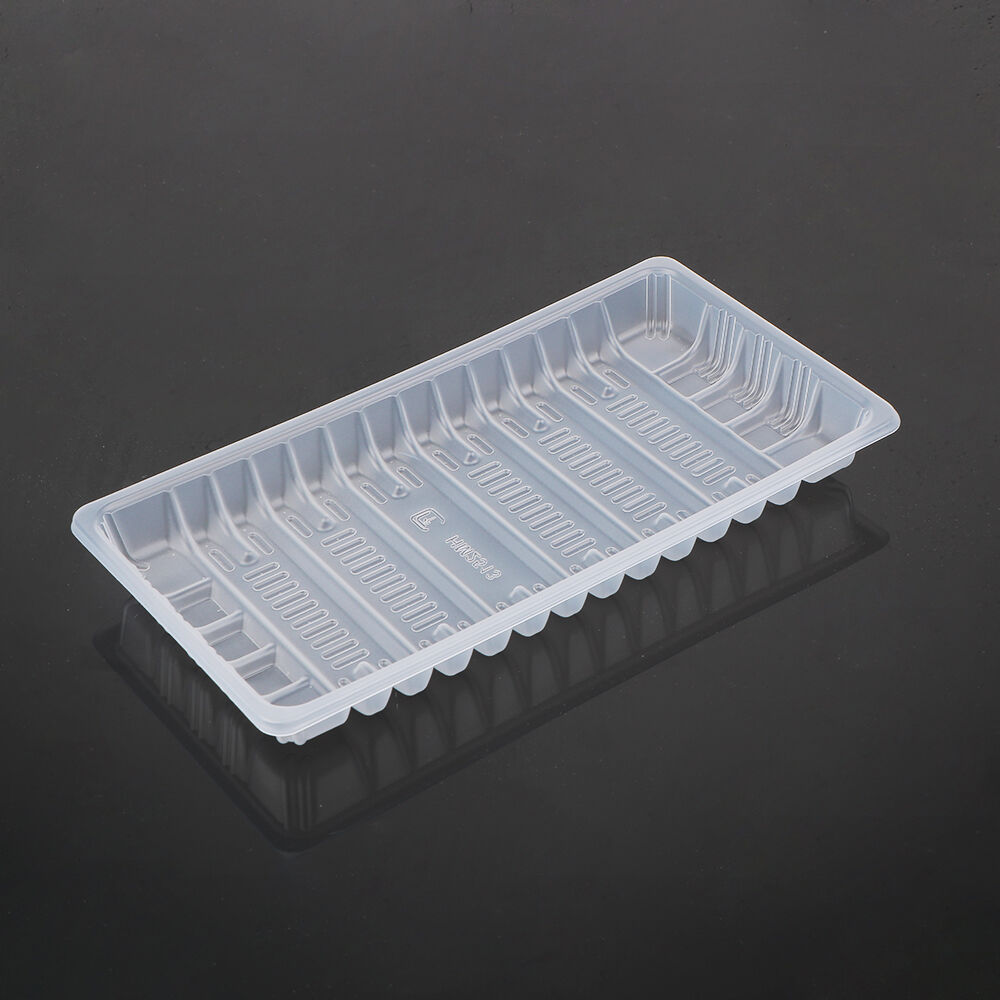
Selecting and Implementing VSP Trays in Commercial Vacuum Sealing
Material compatibility, tray geometry, and sealing parameter optimization for VSP tray performance
Successful VSP implementation hinges on three interdependent factors. First, material compatibility: PET, PP, and APET trays offer optimal balance of rigidity, thermal stability, and oxygen/moisture barrier properties under vacuum conditions. Second, tray geometry—shallow depths, tapered sidewalls, and clean flange profiles—reduces air entrapment and ensures full film-to-tray contact. Third, sealing parameters require precision: film temperature must soften without distorting the tray; vacuum pressure must eliminate micro-wrinkles without crushing delicate items; and dwell time must secure hermetic closure without slowing throughput. Leading processors validate settings through accelerated shelf-life trials—not just leak testing—to ensure consistent performance across production runs.
VSP Tray vs. Alternative Vacuum Packaging Methods
Comparative advantages over chamber vacuum, MAP, and non-chamber systems for fresh proteins and RTE meals
VSP trays deliver distinct advantages for oxygen-sensitive, high-value perishables. Unlike chamber vacuum systems—which compress fragile items like smoked salmon or layered RTE meals—VSP applies gentle, contour-following tension that preserves shape, texture, and presentation. Compared to Modified Atmosphere Packaging (MAP), VSP eliminates gas-mixing infrastructure, calibration complexity, and ongoing gas costs—while achieving comparable or superior shelf-life extension through complete oxygen removal rather than dilution. And unlike non-chamber vacuum systems, which struggle with moisture-laden or irregularly shaped products, VSP’s tray-based design provides structural support and reliable seal integrity—even for marinated proteins or chilled salads. As validated by Packaging Europe’s 2024 analysis of commercial food packaging technologies, this combination of physical protection, atmospheric control, and operational simplicity makes VSP the benchmark for premium fresh protein and RTE meal packaging.