
 EN
EN
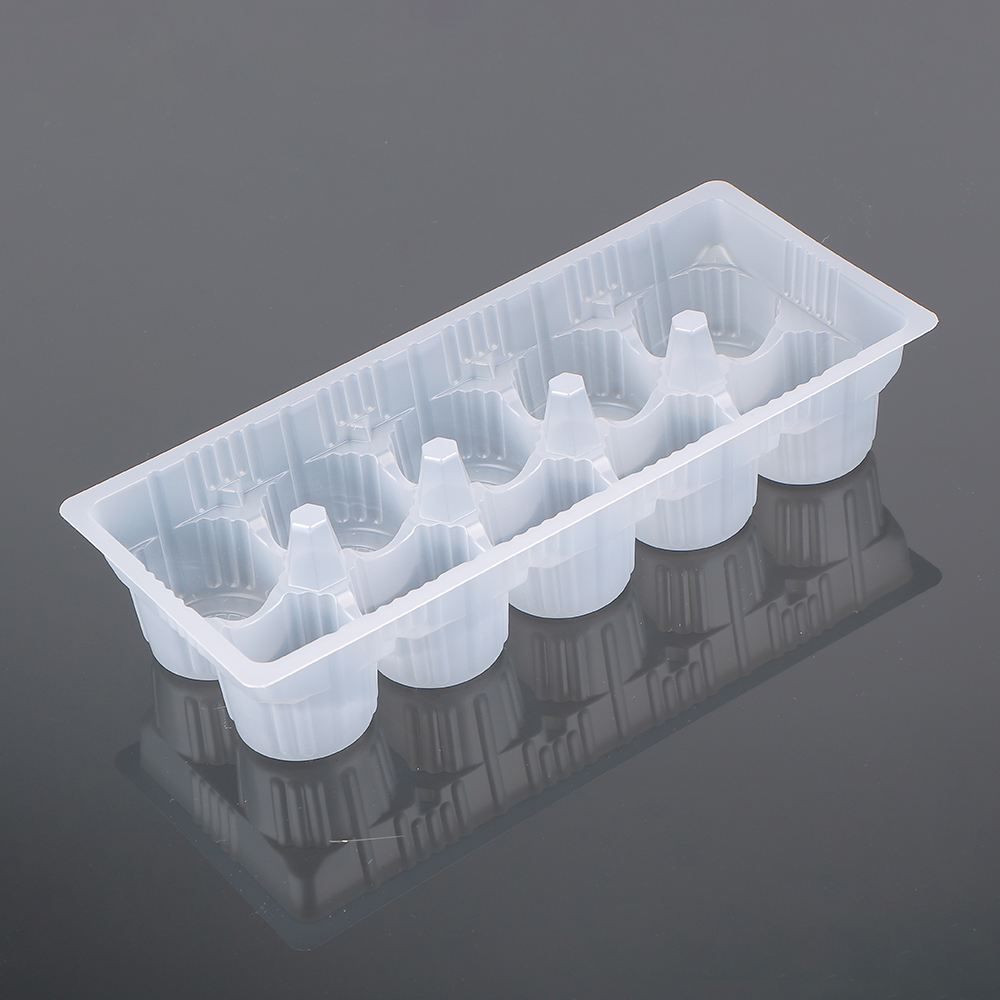
Superior Shelf-Life Extension via Oxygen Elimination
How Vacuum Skin Packaging (VSP Tray) Achieves Near-Zero Oxygen Environments
Vacuum Skin Packaging (VSP) creates near-zero oxygen environments through a precise two-stage process: first, the tray is evacuated to remove over 99.5% of ambient air; second, a heated, multi-layer film conforms tightly to the product’s contours, expelling residual oxygen and forming a gas-impermeable seal. This near-complete oxygen elimination directly inhibits aerobic spoilage pathways—unlike modified atmosphere packaging (MAP), which only reduces oxygen levels. For highly oxidative proteins like beef and salmon, even trace oxygen (as low as 0.5%) accelerates lipid oxidation and microbial growth; VSP’s near-zero O₂ environment mitigates this risk at the source.
Scientific Evidence: Suppression of Aerobic Spoilage Microorganisms (Pseudomonas, Brochothrix)
In oxygen-deprived VSP environments, dominant aerobic spoilage bacteria—including Pseudomonas spp. and Brochothrix thermosphacta—exhibit up to 97% reduced growth within 72 hours (Food Microbiology, 2023). These microbes drive off-odor development through protein degradation into volatile amines, a primary cause of consumer rejection. By suppressing their proliferation, VSP shifts the microbial profile toward slower-growing lactic acid bacteria, significantly delaying spoilage onset. Independent studies show VSP extends display life by 100–150% versus MAP—particularly impactful for retailers managing shrink and waste. For example, RTG Films’ 2023 analysis confirms VSP doubles shelf life compared to traditional packaging while maintaining sensory quality (RTG Films 2023).
Unmatched Drip and Purge Control for Premium Presentation
Skin Film Adhesion Mechanics and Liquid Locking in VSP Tray
VSP achieves “second-skin” adhesion through controlled heat application during vacuum sealing. The multi-layer film conforms precisely to surface topography—eliminating air pockets where purge would otherwise pool. Molecular-level interfacial forces between the film and product surface lock in natural juices, preventing drip formation during transport, storage, and retail handling. This retention preserves meat and seafood texture, weight integrity, and visual freshness—key drivers of consumer trust at the point of sale.
Real-World Performance: 42% Less Purge Loss vs. MAP in Beef — Implications for Retail Freshness
A 2023 industry benchmark study found VSP reduces purge loss in beef cuts by 42% compared to MAP. This translates directly to measurable operational and perceptual advantages:
- Extended display life due to minimized liquid pooling and discoloration
- Consistent net weight—supporting accurate labeling and regulatory compliance
- Improved color stability from inhibited myoglobin oxidation
- Reduced labor for repackaging or tray wiping
Retailers report an 18% reduction in markdowns on VSP-packed proteins. Shoppers consistently associate minimal purge with premium freshness—boosting purchase intent and brand perception at the meat case.
Robust Barrier Protection Against Moisture, Oxidation, and Contamination
Multi-Layer Film Architecture: EVOH, PVDC, and Metallized PET in VSP Tray
VSP trays utilize a purpose-built, co-extruded multi-layer film architecture combining three functional materials:
- EVOH (Ethylene Vinyl Alcohol) provides exceptional oxygen barrier performance—reducing O₂ transmission to near-zero levels when shielded from humidity
- PVDC (Polyvinylidene Chloride) delivers dual protection against both oxygen permeation and moisture vapor ingress
- Metallized PET adds UV reflectivity and supplementary gas barrier properties
These layers are strategically oriented: EVOH is placed centrally, protected by adjacent PVDC layers that preserve its oxygen-blocking efficacy under humid conditions; metallized PET faces outward to deflect retail lighting’s UV spectrum, which accelerates protein and lipid degradation. Together, the laminate reduces water vapor transmission by 98% versus standard films—critical for preventing surface dehydration in delicate seafood. Independent testing shows this configuration extends fresh appearance duration by 40% under typical retail lighting and temperature conditions. Crucially, the composite structure also acts as a physical barrier against environmental contaminants during distribution—ensuring consistent food safety and nutritional integrity across the supply chain.
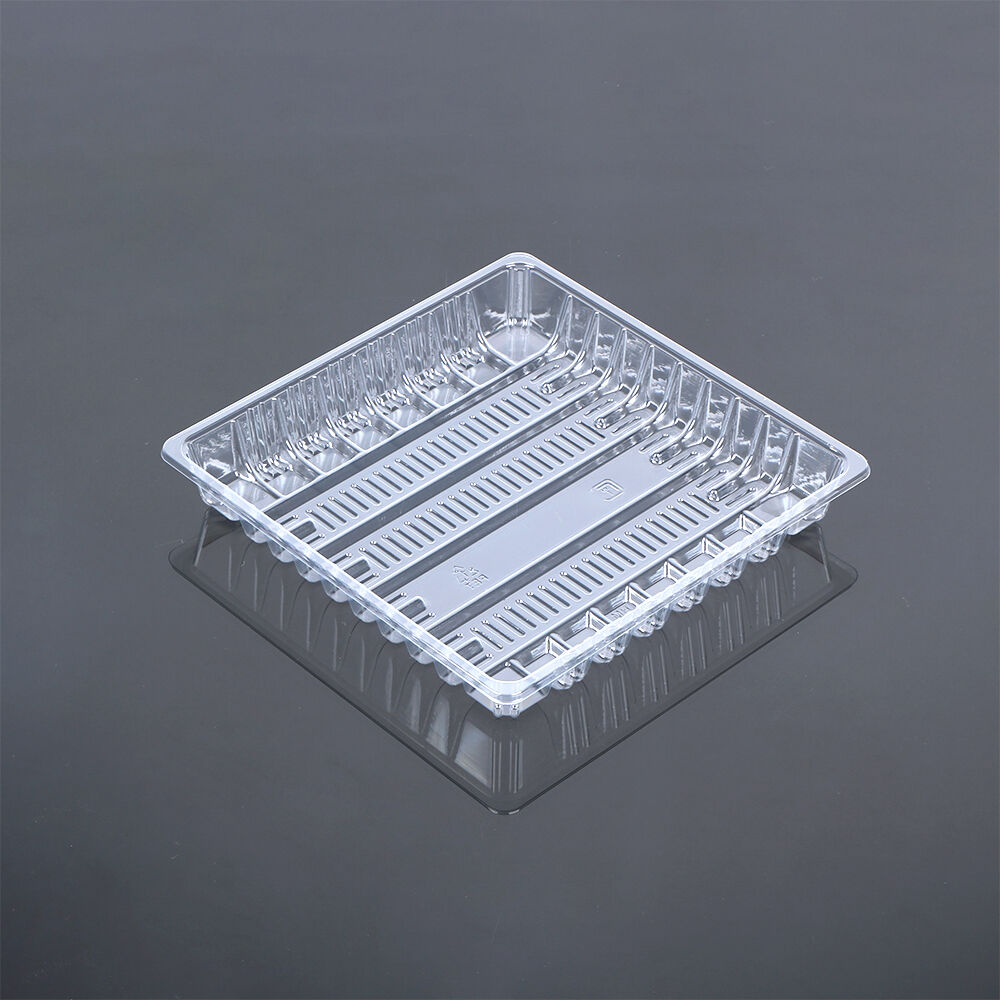
Reliable Performance with Challenging Cuts: Bone-In, Sharp-Edged, and Irregular Proteins
Puncture Resistance and Seal Integrity Validation for Ribeye, Whole Fish, and Lobster Tails
VSP trays deliver proven resilience with high-risk proteins—including bone-in ribeye, whole fish with sharp fins, and irregularly shaped lobster tails. Engineered film formulations and precision thermoforming enable reliable performance where conventional packaging fails. Sealant resins withstand bone protrusions up to 2.3 mm in diameter without breach; whole fish packages endure simulated transport vibrations and dorsal fin pressures of 15 N/cm² with zero leakage. Differential heating zones during thermoforming allow the film to adapt seamlessly to complex geometries—eliminating micro-gaps that compromise barrier integrity. Third-party validation confirms VSP maintains hermetic seals in 98% of challenging cut scenarios—outperforming standard trays by 34% in puncture resistance metrics (Packaging Technology Review, 2023). This structural reliability ensures consistent oxygen exclusion and purge containment—preserving the premium texture and safety of even the most demanding protein formats.