
 EN
EN
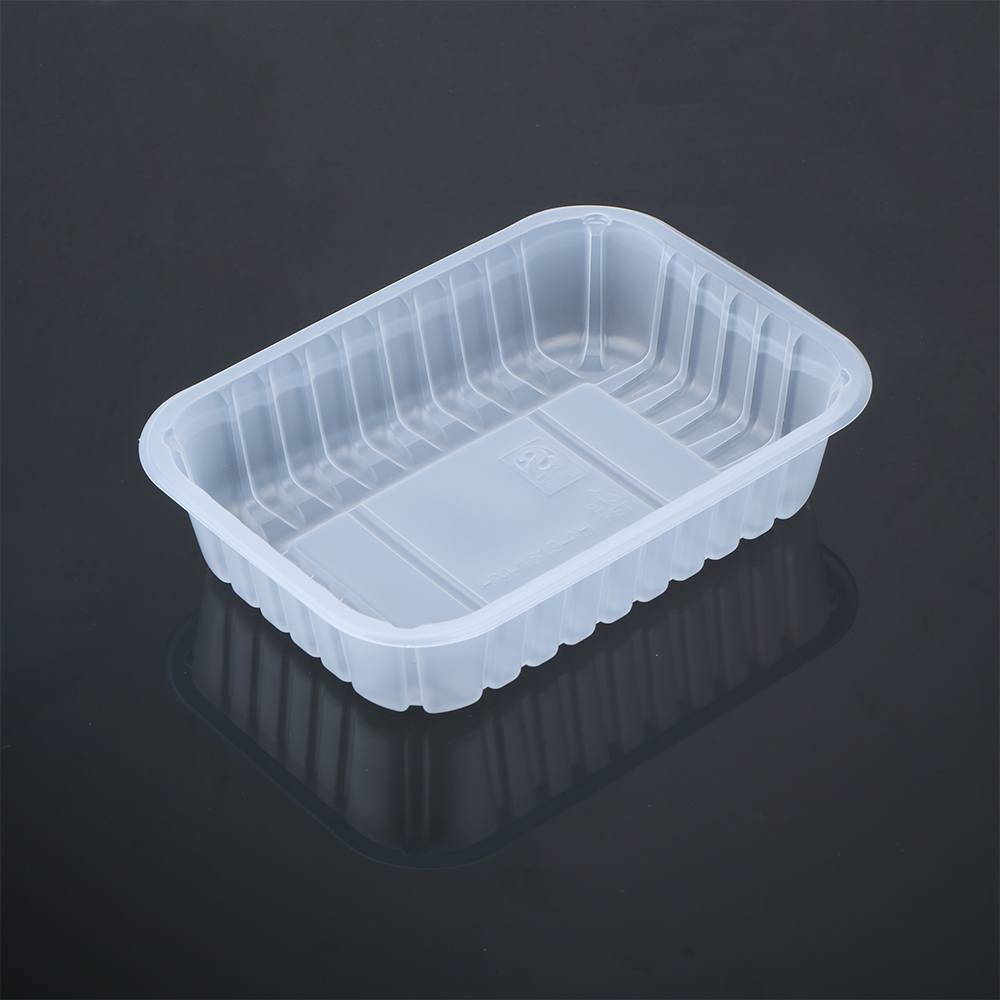
Food-Safe Materials and Regulatory Compliance for Plastic Meat Trays
FDA, EU 10/2011, and BPA-Free Certification Requirements
Plastic meat trays intended for direct food contact must meet stringent regulatory benchmarks. In North America, FDA 21 CFR Part 177 governs acceptable base polymers and additives; in the EU, Regulation (EU) No 10/2011 mandates an overall migration limit of 10 mg/dm² into food simulants. Third-party testing by Intertek (2023) found that 68% of pre-2021 raw-meat trays exceeded this threshold before reformulation—highlighting the necessity of rigorous supply-chain controls. Today, BPA-free status is no longer a premium claim but a baseline expectation: 73% of consumers actively avoid packaging lacking this label, per a 2023 NSF International survey. For polypropylene (PP) and PET trays, compliance hinges on auditing masterbatch pigments, slip agents, and recycled feedstock to eliminate inadvertent bisphenol-A or phthalate carryover. Final validation occurs through BRC-certified quality management systems, which verify every production lot meets migration limits—delivering retailers auditable, lot-level conformity documentation.
Migration Testing and Antimicrobial Surface Validation (ISO 22196)
Migration testing replicates real-world conditions—including refrigeration, retail display, and microwave reheating—to quantify chemical transfer from tray to meat simulants. Standard protocols expose samples to 3% acetic acid (for acidic muscle foods) at 40°C for 10 days, followed by quantification of overall and specific migration using gas chromatography–mass spectrometry. Validated trays must show non-detectable levels of carcinogenic, mutagenic, or reprotoxic substances. Complementary antimicrobial performance is assessed per ISO 22196: trays are inoculated with E. coli and S. aureus, incubated for 24 hours, and evaluated for log-reduction in colony-forming units. Effective formulations achieve ≥2-log (99%) reduction; top-tier solutions exceed 4-log reduction—significantly lowering cross-contamination risk in both retail chillers and home refrigerators, adding a proactive hygiene layer beyond passive barrier function.
Leak-Proof Hygiene Design in Plastic Meat Trays
A leak-proof plastic meat tray is foundational to product integrity, visual appeal, and microbial control. Two integrated design strategies—absorbent media integration and engineered base structures—work synergistically to isolate purge fluids, maintain surface dryness, and inhibit bacterial proliferation.
Soaker Pad Integration and Capillary Moisture Control
Soaker pads placed beneath the meat provide a multi-layered fluid management system. A nonwoven top sheet directs purge downward into a superabsorbent polymer (SAP) core capable of retaining 5–10 g of liquid without backflow, while a polyethylene backing film prevents tray saturation. This capillary action keeps the meat surface visibly drier—a critical factor in reducing aerobic plate counts and slowing spoilage. The benefit is most pronounced for high-moisture proteins like chicken and red meat, where drip loss can reach 3% of cut weight within 24 hours. By sequestering fluids, the system also eliminates condensation buildup under overwrap film, preserving both hygiene and shelf appeal.
Honeycomb Base Structures and Optimized Drainage Channels
The tray floor itself functions as a passive drainage system. Honeycomb-like recesses and raised ridges channel juices into dedicated compartments, with hexagonal cell geometry distributing compressive loads evenly to resist deformation during stacking and transport. Narrow connecting channels guide fluid away from meat contact points—ensuring excess liquid remains contained even if the soaker pad reaches capacity. This dual-path design sustains a consistently dry presentation surface, maintains product separation, and minimizes drip-borne contamination across the cold chain.
Barrier Performance for Shelf Life Extension in Plastic Meat Trays
Shelf life for fresh meat is directly tied to a plastic meat tray’s ability to restrict oxygen and moisture ingress. Without robust barrier performance, refrigerated products rapidly deteriorate—exhibiting color fading, lipid oxidation, and accelerated microbial growth. Advanced multi-layer tray structures extend fresh meat shelf life from 4–5 days to 10–14 days; vacuum-sealed formats may surpass 45 days (MarketIntelo, 2025). Material selection and precise oxygen transmission rate (OTR) control are the two decisive technical levers.
Coextruded Barrier Layers: EVOH, PVDC, and SiOx-Coated PET Compared
Coextrusion integrates multiple polymers into a single tray wall, assigning each layer a specialized barrier role. The three leading high-barrier solutions are:
- EVOH (Ethylene Vinyl Alcohol): Delivers best-in-class oxygen barrier when dry (OTR < 0.1 cc/m²·day), but loses efficacy above 60% relative humidity—requiring encapsulation between polyolefin layers (e.g., PE or PP) for stability.
- PVDC (Polyvinylidene Chloride): Offers balanced oxygen and moisture resistance independent of ambient humidity, making it well-suited for vacuum-packed applications—though chlorine content raises end-of-life recycling concerns.
- SiOx-Coated PET: A transparent silicon oxide coating applied to PET provides oxygen barrier performance comparable to EVOH, retains effectiveness in high-humidity environments, and supports mechanical recyclability—albeit at a higher cost.
In practice, optimal designs combine functional layers: an EVOH core sandwiched between PP for strength and sealability, or PVDC-coated PET for vacuum applications. The final choice balances target shelf life, packaging format (MAP vs. vacuum), and regional recycling infrastructure.
Oxygen Transmission Rate (OTR) Targets Under 0.5 cc/m²·day
For fresh red meat, an OTR below 0.5 cc/m²·day is the widely accepted benchmark to preserve color stability and delay oxidative rancidity over a 10–14-day retail window. Research published in ScienceDirect (2022) showed ground beef in ultra-low-permeability trays achieved sensorial shelf life extensions of 9 days under aerobic conditions—and over 12 days under vacuum. Even incremental improvements—such as replacing permeable PVC with an EVOH-coextruded tray—extend storage by up to 4 days for ground beef, directly suppressing metmyoglobin formation and pathogen proliferation. Achieving this target relies on precise layer thickness control, coextrusion die optimization, and robust tie-layer adhesion to prevent delamination—ensuring barrier integrity remains intact throughout the pack’s entire lifecycle.
Functional Compatibility Across Retail and Processing Workflows
A plastic meat tray must operate as a seamless component—not a bottleneck—in modern retail and processing ecosystems. Misalignment with automation systems can reduce line speeds by up to 15%, according to a 2023 industry benchmark. To ensure compatibility, trays require tight dimensional tolerances matching standard conveyor widths and robotic gripper footprints, plus a stable, low-center-of-gravity base to prevent tipping during high-speed filling and sealing. Surface finish must support durable, scannable barcode printing—whether direct-printed or label-applied—to enable real-time inventory tracking across POS and warehouse management platforms. Stackability further extends functionality: optimized nesting and interlocking features improve case-packing efficiency, reduce cube utilization waste, and stabilize pallet loads—directly improving shipping economics and D2C fulfillment accuracy. When designed with these operational realities in mind, plastic meat trays uphold product protection and shelf appeal while enabling scalable, omnichannel distribution.
FAQs
1. What are the key regulations governing plastic meat trays?
In North America, FDA 21 CFR Part 177 governs base polymers and additives, while in the EU, Regulation (EU) No 10/2011 focuses on migration limits. BPA-free status is also a mandatory requirement for consumer safety.
2. How is migration testing conducted for plastic meat trays?
Migration testing involves exposing trays to specific conditions (e.g., 3% acetic acid at 40°C for 10 days) and measuring the chemical transfer to food simulants. Gas chromatography–mass spectrometry is used for quantification.
3. What design features enhance leak-proofing in meat trays?
Leak-proofing is achieved through absorbent soaker pads and honeycomb base structures. These designs manage fluid isolation and drainage effectively to maintain hygiene.
4. How do coextruded barrier layers improve shelf life?
Coextruded layers combine multiple polymers like EVOH, PVDC, and SiOx-coated PET for optimal oxygen and moisture resistance, extending fresh meat shelf life from 4–5 days to 10–14 days or beyond.
5. What is the optimal oxygen transmission rate (OTR) for preserving fresh meat?
An OTR below 0.5 cc/m²·day is recommended for fresh red meat to retain color stability and delay spoilage over a 10–14-day period.