
 EN
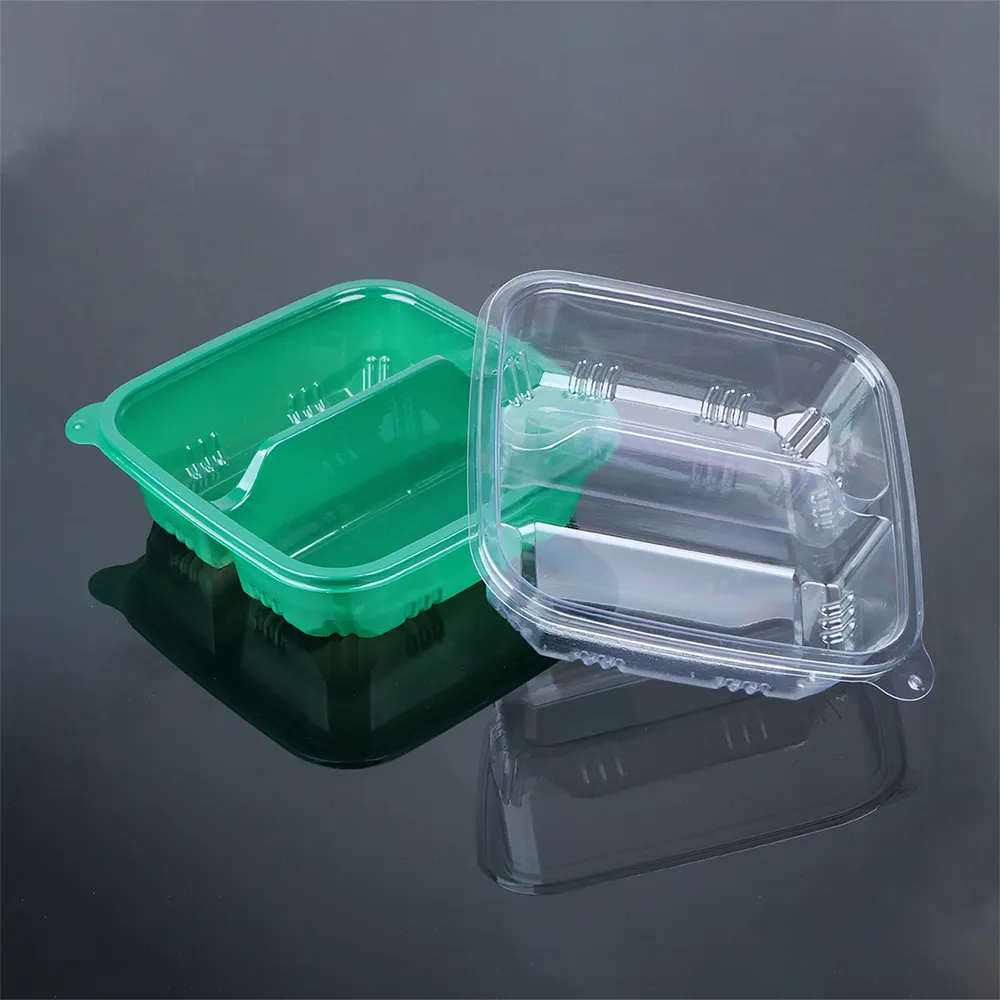
PET Clamshell Packaging: Key Material Properties Driving Food Compatibility
Clarity, Rigidity, and Moisture Barrier Performance of PET
PET clamshell containers offer exceptional clarity—enabling consumers to inspect product quality at a glance—and natural rigidity that maintains structural integrity under refrigeration. This combination prevents crushing during transport and stacking, reducing damage rates by up to 15% compared to flexible films (Packaging Engineering 2024). Crucially, PET’s low water vapor transmission rate (WVTR) restricts moisture migration, keeping high-water-content foods like berries and cherry tomatoes from dehydrating while preserving crispness and visual appeal. That balance of transparency, humidity resistance, and mechanical strength makes PET a top choice for fresh produce displays, where shelf presence and freshness directly influence purchase decisions.
Oxygen Permeability Limits and Recyclability in B2B Supply Chains
PET’s oxygen transmission rate (OTR) of 70–100 cm³/m²·day·atm is sufficient for many fresh fruits and vegetables but falls short for highly oxygen-sensitive items such as sushi or raw seafood, where lipid oxidation can trigger rancidity and discoloration within days. In B2B settings, this limitation is commonly mitigated through modified atmosphere packaging (MAP) or co-extruded barrier layers—notably ethylene vinyl alcohol (EVOH)—rather than relying on PET alone. On the sustainability front, PET (resin code #1) benefits from mature municipal recycling infrastructure. The U.S. PET bottle recycling rate reached 28.4% in 2022 (NAPCOR 2023), and collection systems for thermoformed clamshells are expanding in parallel. Increasingly, food-grade recycled PET (RPET) is being reintegrated into new clamshells—a development that supports corporate circularity goals without compromising performance.
Best-Fit Fresh Foods for PET Clamshell Packaging
High-Moisture Produce (e.g., Berries, Cherry Tomatoes): Leveraging PET’s Humidity Resistance
PET clamshells are especially well-suited for high-moisture produce—including strawberries, blueberries, and cherry tomatoes—thanks to their ability to manage internal humidity without condensation. Their low WVTR prevents ambient moisture from entering while retaining just enough internal moisture to prevent shriveling and maintain firm, glossy skins. The rigid structure protects delicate surfaces from compression damage during transit and retail handling, directly extending shelf life and reducing food waste. Combined with superior clarity—which allows visual inspection without package opening—these properties boost consumer confidence, lower return rates, and strengthen cold-chain performance for B2B buyers.
Leafy Greens and Ready-to-Eat Salads: Balancing Light Exposure and Shelf-Life Needs
For leafy greens and ready-to-eat salads, PET delivers strong merchandising advantages through transparency, but requires thoughtful formulation to mitigate light-induced degradation. Unfiltered exposure accelerates chlorophyll breakdown and yellowing; accordingly, many commercial PET clamshells incorporate UV inhibitors or subtle tinting to preserve color and freshness. Micro-perforations in the lid support controlled respiration—preventing wilting while avoiding excess moisture buildup—and PET’s stiffness safeguards volume and texture against compression. As a widely accepted curbside recyclable material, PET also aligns with retailer and brand sustainability commitments, delivering operational efficiency from packing line to point of sale.
Limited-Suitability Foods: Where PET Clamshell Falls Short
While PET excels in clarity, rigidity, and moisture control, its moderate oxygen barrier and limited resistance to odor migration make it unsuitable for certain high-risk categories.
Sushi, Raw Seafood, and High-Oil Items: Oxygen Sensitivity and Odor Migration Risks
Standard PET lacks the oxygen barrier needed for sushi-grade seafood or raw fish, where even modest OTR levels accelerate lipid oxidation—leading to rancidity, off-flavors, and visual deterioration within days. Similarly, high-oil foods (e.g., marinated proteins, fried snacks) are vulnerable to flavor scalping: volatile compounds from PET can migrate into the product, or conversely, food volatiles may permeate the polymer, altering taste and aroma. Compounding this, strong odors from seafood can migrate out of PET clamshells, cross-contaminating adjacent products on shelves and undermining brand trust. For these applications, packaging engineers rely on multilayer solutions—such as PET/EVOH or PET/aluminum foil laminates—that deliver hermetic-level protection and sensory stability.
FAQs About PET Clamshell Packaging
What foods benefit the most from PET clamshell packaging?
High-moisture produce like berries, cherry tomatoes, and leafy greens benefit the most, as PET manages humidity and maintains their freshness while offering clarity for product inspection.
Is PET packaging recyclable?
Yes, PET (resin code #1) is widely recyclable, and the infrastructure for recycling is growing. Food-grade recycled PET (RPET) is increasingly being reintegrated into packaging materials, supporting sustainability goals.
Why is PET not suitable for sushi or raw seafood?
PET has limited oxygen barrier properties, which can lead to lipid oxidation and spoilage in oxygen-sensitive foods like sushi and raw seafood.
Can PET clamshells handle strong odors?
Standard PET may struggle with odor migration, potentially allowing seafood odors to escape and cross-contaminate nearby items. Multilayer solutions offer better sensory stability.