
 EN
EN
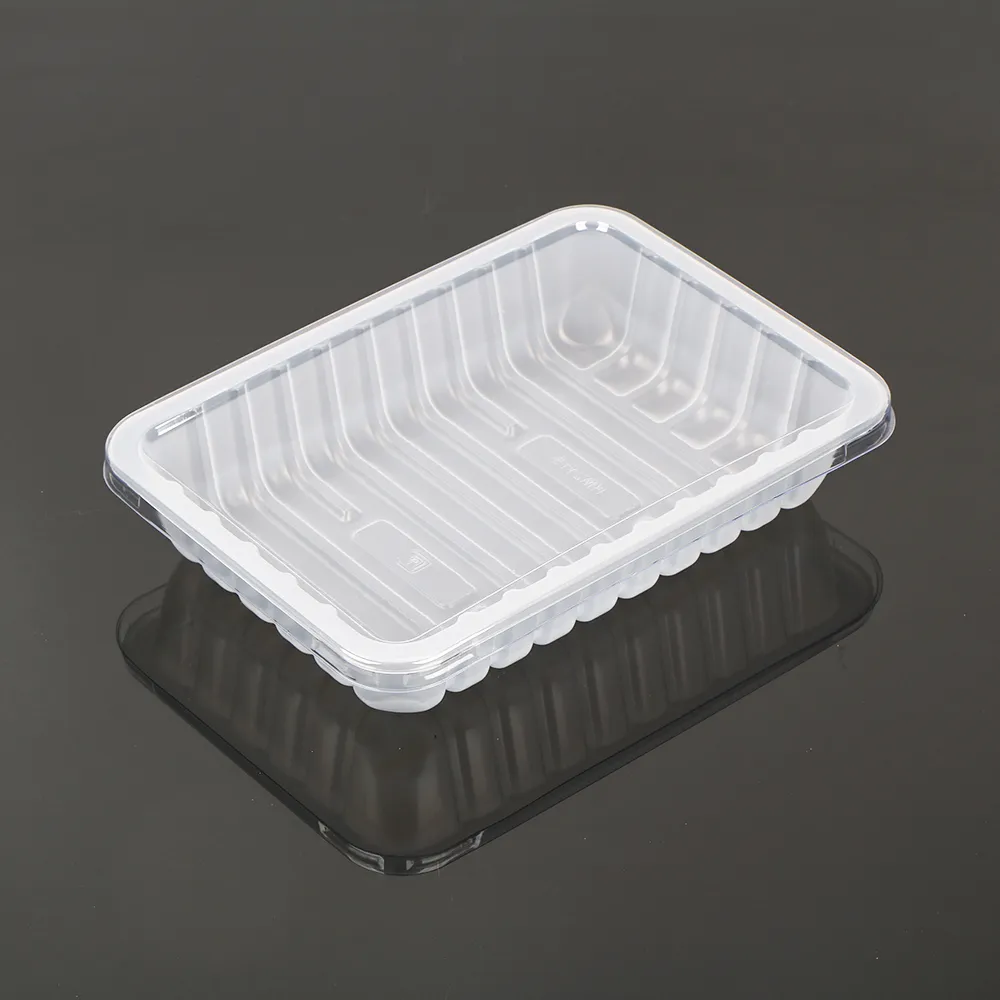
Superior Visual Appeal and Consumer Engagement
Optical Clarity and Freshness Perception: How Transparency Drives Trust
The visual appeal of food packaging is a critical driver of consumer trust. A transparent plastic food tray allows shoppers to directly inspect the product—confirming freshness and quality at a glance. This immediate visual access aligns with how the human brain processes information: research from the Visual Teaching Alliance indicates that 90% of transmitted information is visual, making sight the dominant sense in purchasing decisions. When fruits, vegetables, or prepared meals are displayed in crystal-clear trays, perceived freshness intensifies. Consumers can evaluate color, texture, and integrity without obstruction—reducing uncertainty and building confidence. Manufacturers often select PET for its high optical clarity, creating a window that showcases the product’s best attributes. This transparency reinforces brand trust and encourages faster purchase decisions. In a marketplace where first impressions form in seconds, a clear plastic food tray serves as a silent salesperson—communicating purity, safety, and quality. The psychological effect is powerful: when shoppers see exactly what they’re getting, they’re more likely to trust the brand and return.
Eye-Tracking Insights: Why Plastic Food Tray Visibility Boosts Impulse Purchases
Visual clarity in packaging directly influences consumer behavior, as confirmed by eye-tracking studies. Highly visible packaging draws shoppers’ gaze more quickly and holds attention longer—especially on crowded retail shelves. A plastic food tray with excellent transparency acts as a visual magnet: the human eye is naturally drawn to bright, unobstructed surfaces that signal freshness and safety. This heightened visibility converts passive browsers into impulsive buyers. In retail environments, impulse purchases account for a significant share of sales—and packaging that makes the product “pop” is key. A well-designed tray eliminates visual barriers, allowing the product to speak for itself. Because it reduces cognitive load and fosters a sense of immediate gratification, consumers are more likely to pick up an item they can see clearly. The strategic use of transparent materials is not merely aesthetic; it’s a scientifically backed method to increase pick-up rates. By capturing attention at the critical moment of decision, these trays help brands capitalize on spontaneous buying triggers—delivering a measurable uplift in sales through the simple power of visibility.
Operational Efficiency and Cost Performance
Stackability, Impact Resistance, and Throughput in High-Volume Settings
In high-volume food service environments, the physical design of a plastic food tray directly accelerates throughput. A stackable tray profile reduces storage footprint by up to 30%, enabling operators to stage more product in limited space (Logistics Efficiency Study 2023). Impact resistance is equally critical: advanced polymer formulations withstand drops of 1.5 m without fracture—compared to fiber-based alternatives that fail at 0.8 m (Packaging Technology Report 2024). This durability eliminates breakage waste and minimizes line stoppages. During rush periods, a server can retrieve, fill, and display a stack of 20 trays in under 15 seconds—a speed brittle materials cannot match. The combination of seamless stacking and shatter resistance transforms back-of-house workflow into a continuous, low-interruption process.
TCO Analysis: Plastic Food Tray Longevity vs. Alternatives Over 12 Months
A total cost of ownership (TCO) analysis reveals that the plastic food tray consistently outperforms alternatives when durability and reuse cycles are factored in. The table below compares a typical polypropylene tray against molded pulp and coated cardboard across a 12-month lifecycle in a high-turnover setting.
| Cost Factor | Plastic Food Tray | Molded Pulp | Coated Cardboard |
|---|---|---|---|
| Unit price per tray | $0.80 | $0.45 | $0.35 |
| Average reuse cycles per unit | 200 | 5 | 1 |
| Effective cost per display event | $0.004 | $0.09 | $0.35 |
| Annual replacement volume | 50 | 2,000 | 10,000 |
| 12‑month total spend | $40 | $900 | $3,500 |
Based on reuse rates validated by the Food Packaging Institute (2024), the plastic tray delivers a cost per display event that is 96% lower than cardboard and 95% lower than pulp. While the initial unit price is higher, the extended service life and near-zero breakage make the plastic food tray the most capital-efficient choice for professional food display.
Functional Protection: Extending Shelf Life and Maintaining Quality
Barrier Performance Data: OTR and WVTR Across PET, PP, and PS Plastic Food Trays
The ability of a plastic food tray to protect contents relies on its oxygen transmission rate (OTR) and water vapor transmission rate (WVTR)—key metrics that influence freshness, appearance, and texture retention. The table below summarizes typical barrier properties for three common tray materials.
| Material | Typical OTR (cc/m²·day) | Typical WVTR (g/m²·day) |
|---|---|---|
| PET | 3–5 | 1–3 |
| PP | 15–30 | 0.5–1.0 |
| PS | 25–50 | 2–4 |
Note: Values are approximate and depend on thickness, additives, and ambient conditions.
PET’s strong oxygen barrier helps prevent oxidation—making it ideal for fresh-cut fruit or baked goods. PP offers superior moisture resistance, preserving crispness in items less sensitive to oxygen. PS, while economical, provides comparatively lower protection and is typically reserved for short-term displays. Selecting the right material isn’t just about cost—it’s a functional decision with direct impact on shelf life. High-barrier trays, for example, have been shown to cut spoilage rates by 50% compared to standard alternatives (Food Packaging Insights 2024).
FAQ
Why is transparency in food packaging important?
Transparency allows consumers to directly inspect the product, providing a clear view of its quality and freshness. This builds trust and encourages quicker purchase decisions.
What is the significance of eye-tracking studies in packaging design?
Eye-tracking studies reveal that visible and transparent packaging attracts more attention on retail shelves, boosting impulse purchases by showcasing the product’s appeal.
Why is stackability important for plastic food trays?
Stackable trays save storage space, reduce wastage, and allow for efficient handling in high-volume food service environments, making overall processes more streamlined and cost-effective.
How does the total cost of ownership compare for plastic food trays versus alternatives?
Plastic food trays have a higher initial cost but offer greater durability and reuse cycles, leading to significantly lower long-term costs compared to materials like molded pulp or coated cardboard.
What are OTR and WVTR, and why are they important for food trays?
OTR (Oxygen Transmission Rate) and WVTR (Water Vapor Transmission Rate) measure a material’s ability to block oxygen and moisture, respectively. Lower rates help in preserving the freshness, appearance, and texture of food.
Table of Contents
- Superior Visual Appeal and Consumer Engagement
- Operational Efficiency and Cost Performance
- Functional Protection: Extending Shelf Life and Maintaining Quality
-
FAQ
- Why is transparency in food packaging important?
- What is the significance of eye-tracking studies in packaging design?
- Why is stackability important for plastic food trays?
- How does the total cost of ownership compare for plastic food trays versus alternatives?
- What are OTR and WVTR, and why are they important for food trays?