
 EN
EN
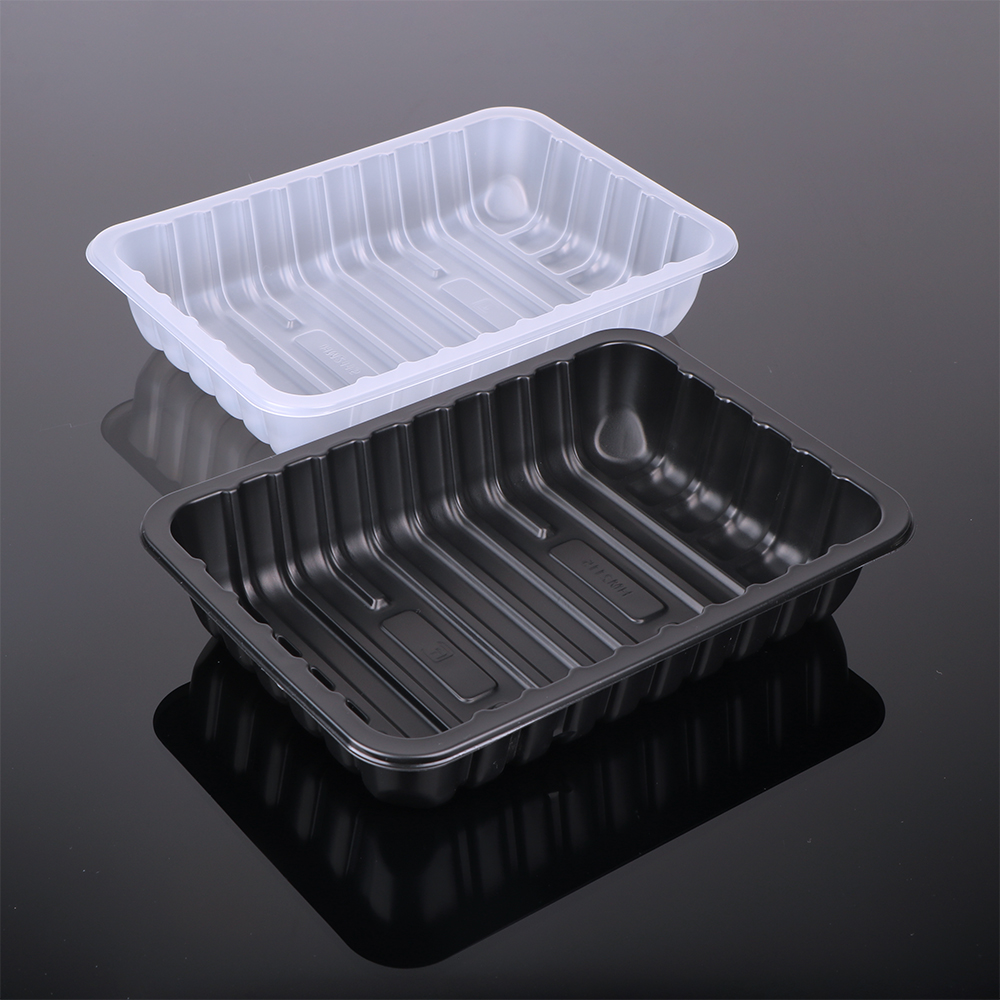
MAP Container Fundamentals: Gas Composition and Preservation Science
Core mechanism: How O₂ reduction, CO₂ enrichment, and N₂ inerting inhibit spoilage microbes
Modified Atmosphere Packaging (MAP) preserves food through three synergistic gas actions. Reducing oxygen to <5% starves aerobic spoilage bacteria like Pseudomonas. Elevating CO₂ to 20–30% leverages its solubility in product moisture—forming carbonic acid that lowers intracellular pH and disrupts microbial membranes. Nitrogen serves a dual role: inertly displacing residual O₂ and maintaining structural integrity of the package under vacuum or refrigeration. Together, these mechanisms slow microbial growth by up to 60% versus air packaging, significantly extending freshness without preservatives.
Critical trade-offs: When high CO₂ extends shelf life but compromises texture or respiration in fresh produce
CO₂ is highly effective against pathogens such as Listeria monocytogenes, yet its application in fresh produce demands precision. While concentrations above 15% can extend shelf life by 7–10 days, they risk suppressing essential enzymatic activity and natural ripening. Leafy greens may shift toward anaerobic metabolism, increasing off-flavor risk; berries suffer membrane damage that degrades firmness and juiciness. Successful MAP for produce hinges on balancing film permeability—allowing just enough O₂ (1–5%) to sustain aerobic respiration while retaining sufficient CO₂ (5–15%) for microbial control. This equilibrium prevents fermentation without triggering tissue stress.
Optimizing MAP Container Operation: Flushing, Purging, and Blanketing Protocols
Step-by-step gas exchange: Achieving <1% residual O₂ in rigid MAP containers
Achieving ≤1% residual oxygen in rigid MAP containers is essential to inhibit lipid oxidation and aerobic spoilage—particularly by Pseudomonas spp., which proliferate rapidly above this threshold (Food Preservation Journal, 2023). Industrial best practice follows a validated multi-stage displacement protocol grounded in Dalton’s Law of partial pressures:
- Initial vacuum purge: Reduce ambient air to ≤30 mbar absolute pressure
- Counter-gas flush: Inject ≥99.995% pure nitrogen at 0.8–1.2 bar for 3 seconds
- Repeat displacement cycle: Perform 2–3 flush-purge iterations to dilute trapped O₂
- Final gas blanket: Seal under slight positive N₂ pressure
When executed with calibrated equipment and cycle times >8 seconds, this process achieves <0.8% residual O₂ in PET trays. However, performance depends heavily on container geometry—deep-drawn sections trap air pockets—and lid material: polypropylene lids with OTR >100 cc/m²/day risk post-seal O₂ rebound. Validated parameters must account for both design and barrier properties. Consistently sub-1% O₂ levels extend chilled meat shelf life by 40–70% over passive systems.
Product-Specific MAP Container Strategies for Maximum Shelf Life
Meat and seafood: 70–80% N₂ + 20–30% CO₂ to suppress Pseudomonas and Brochothrix thermosphacta
For meat and seafood, the optimal MAP gas blend is 70–80% nitrogen and 20–30% carbon dioxide. This ratio creates stable anaerobic conditions that strongly inhibit key spoilage organisms: Pseudomonas spp. (slime formation) and Brochothrix thermosphacta (off-odor development), both highly sensitive to CO₂’s antimicrobial action. The high N₂ fraction maintains internal pressure to prevent package collapse and supports visual appeal by stabilizing myoglobin color. Crucially, residual oxygen must remain below 0.5%—not only to prevent microbial resurgence but also to avoid myoglobin oxidation and surface discoloration. When implemented correctly, this strategy extends chilled shelf life by 50–100% versus air packaging and reduces spoilage incidence by 60%.
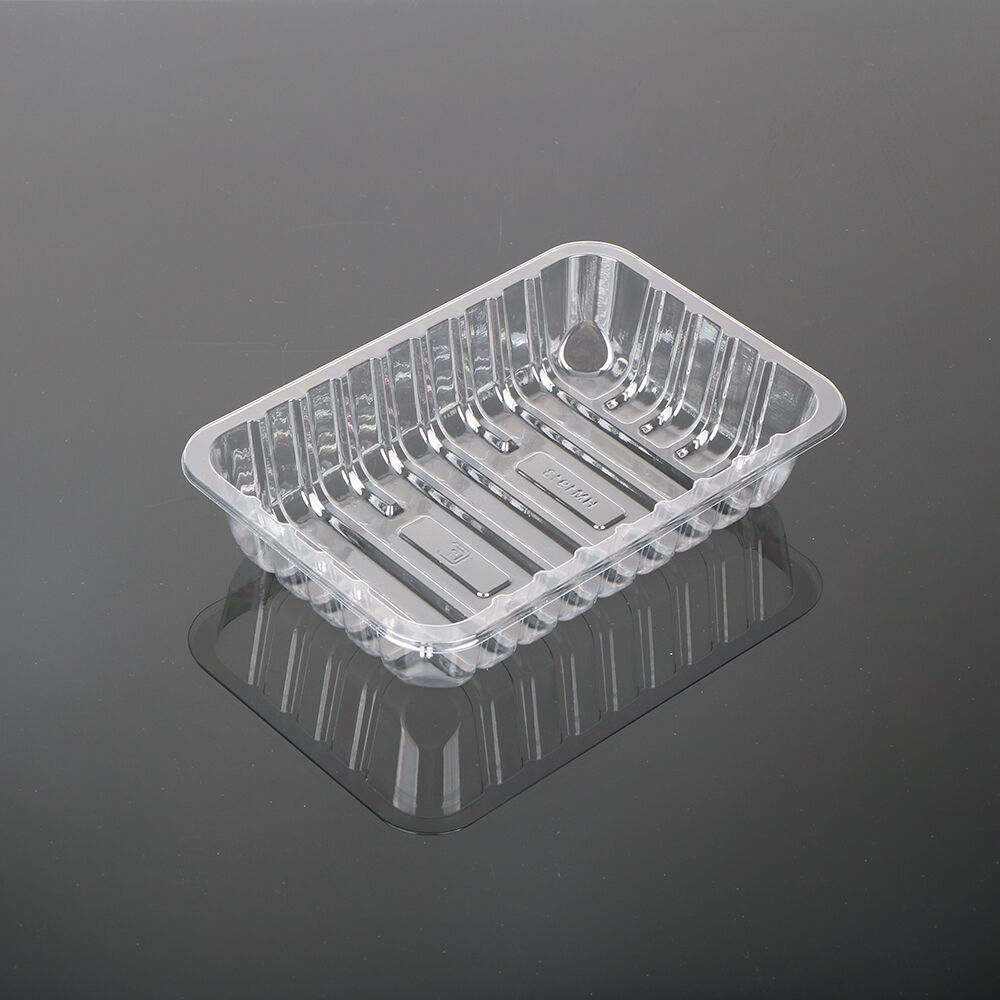
Fresh produce: Low-O₂ (1–5%), moderate-CO₂ (5–15%) with permeability-matched films
Fresh produce requires an active, dynamic atmosphere—not static gas fill. A target range of 1–5% O₂ and 5–15% CO₂ slows respiration and delays ripening by 30–40%, but success depends entirely on film selection. Equilibrium Modified Atmosphere Packaging (EMAP) uses permeability-matched films—often microporous or microperforated—to allow continuous gas exchange aligned with the product’s metabolic rate. Exceeding 15% CO₂ risks cellular injury in lettuce and spinach; dropping below 1% O₂ triggers fermentation in apples and pears. Berries perform best with films offering 15–20 kPa OTR to limit mold growth, while mushrooms require very high CO₂ permeability (>5,000 cc/m²·day) to prevent enzymatic browning. Tailored EMAP reduces postharvest waste by up to 25%, according to peer-reviewed field studies.
MAP Container Material Selection: Balancing OTR, WVTR, and Structural Integrity
Material selection dictates whether a MAP container delivers on its preservation promise—by governing oxygen ingress (OTR), moisture loss/gain (WVTR), and mechanical resilience. High-barrier materials like EVOH laminates achieve ultra-low OTR (<0.5 cc/m²·day) and low WVTR (<1 g/m²·day), ideal for oxygen-sensitive products—but often lack puncture resistance or flexibility. In contrast, polyolefins such as LDPE offer excellent toughness and low-temperature impact strength, yet their OTR exceeds 1,500 cc/m²·day—making them unsuitable for long-term aerobic inhibition without secondary barriers.
| Material Type | OTR Barrier | WVTR Barrier | Structural Integrity |
|---|---|---|---|
| EVOH Laminate | Excellent | Medium | Moderate (requires support) |
| PET | Medium | Medium | High (rigid) |
| LDPE | Poor | Medium | High (flexible) |
The right choice reflects functional priorities:
- Delicate baked goods prioritize crush resistance over OTR, accepting moderate barrier trade-offs.
- Oily snacks demand ultra-low WVTR to retain crispness—typically requiring metallized or laminated structures.
- Frozen applications require materials that remain ductile below −20°C, avoiding brittle fracture during distribution.
Mismatched materials reduce shelf life by up to 40% (Food Packaging Journal, 2023). For example, pairing a high-barrier but brittle film with heavy, sharp-edged products increases seal failure risk. Engineers must model combined gas/moisture flux and compression loads to ensure packages survive transit while sustaining precise atmospheric conditions.