
 EN
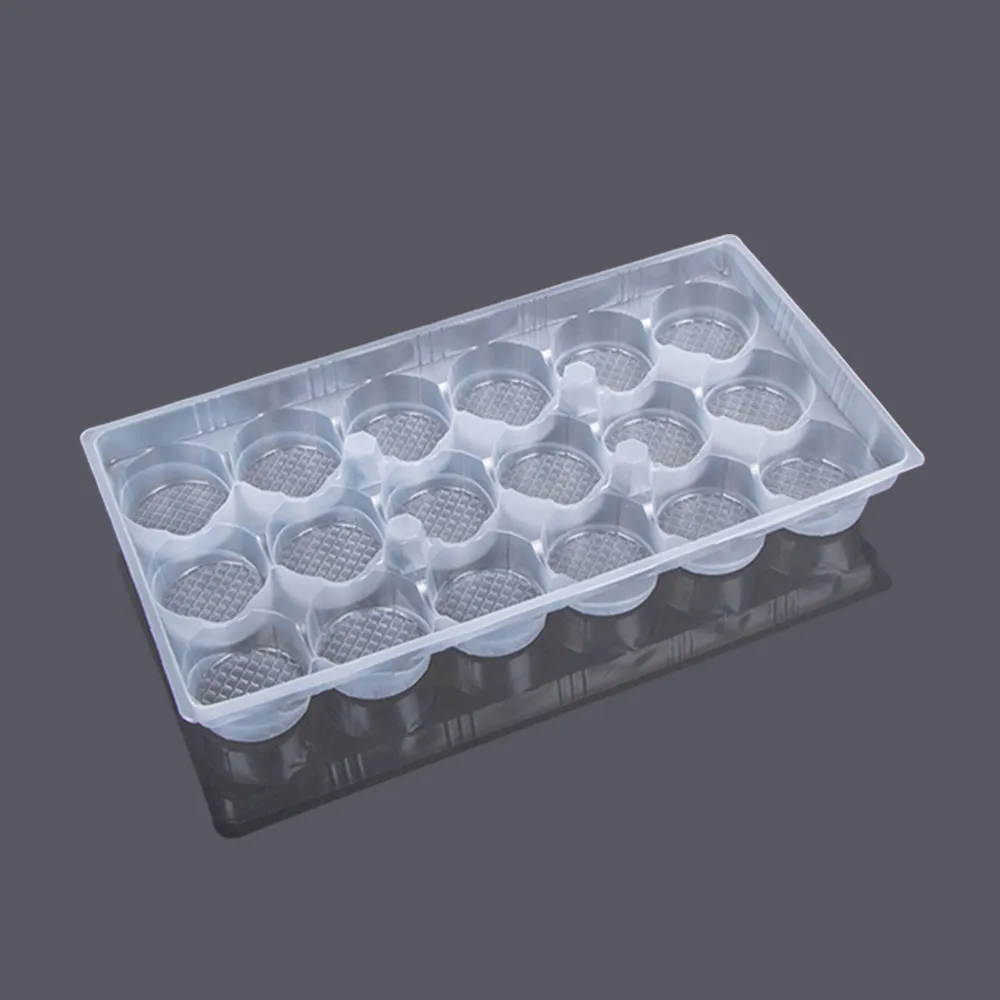
Microwave Safety and Thermal Performance of PP Food Trays: Thermal Stability & Chemical Migration Analysis
Industrial meal processors, ready-to-eat brand owners, and commercial food distributors frequently encounter structural collapse or chemical migration issues when reheating packaged meals. While general food containers claim heat tolerance, real-world microwave environments subject packaging to localized hot spots, boiling lipids, and acidic steam.
Polypropylene (PP) food trays provide a reliable solution for high-temperature commercial and consumer applications. This technical analysis evaluates the crystal physics, thermomechanical tolerance, chemical migration safety, and cleanroom manufacturing rigor that make PP trays the reliable choice for heat-and-serve packaging.
Thermal Physics and Structural Integrity During Microwave Reheating
Commercial microwave reheating drives water and oil molecules in food to rapid boiling, creating local surface contact temperatures between 100°C and 130°C. Maintaining dimensional stability under these stresses requires packaging engineered for high heat distortion resistance.
Melting Point Safety Margins
-
Polypropylene (PP): Features a semi-crystalline polymer matrix delivering a high melting point between 160°C and 170°C. This molecular architecture provides a safety margin of 40°C to 70°C above peak reheating contact temperatures, retaining structural rigidity under 120°C+ continuous load to prevent tray buckling when handled hot.
-
Polystyrene (PS): Softens and deforms at 60°C to 80°C, risking severe warping, side-wall collapse, and accidental spill hazards.
-
Polyethylene Terephthalate (PET): Unmodified PET loses structural stiffness near 70°C, making it unsuitable for direct high-wattage microwaving without specialized crystallization (CPET).
Mold Engineering and Wall Uniformity
Thermal resistance alone cannot prevent failure if dynamic wall thickness varies across the packaging structure. At Hengmaster, precision thermoforming machines in Class 100,000 cleanrooms ensure uniform material distribution across the tray base, sidewalls, and flange. Controlled wall geometry eliminates thin spots that could bow under steam pressure or soften under boiling fats, maintaining continuous seal integrity with heat-sealed top lidding films or snap-fit covers.
Chemical Inertness, Migration Testing, and Global Compliance
High temperatures can accelerate chemical mobility inside polymer matrices. Ensuring food-contact safety requires strict adherence to international regulatory frameworks and rigorous third-party migration testing.
| Regulatory Standard | Testing Condition / Simulant | Compliance Threshold | PP Performance Result |
| FDA 21 CFR 177.1520 | 10% Ethanol, 3% Acetic Acid, n-Heptane extractives | Below 0.5 mg/sq.in total extractives | Fully Compliant (Negligible transfer) |
| EU Reg (EC) No 1935/2004 | Food Simulant D2 (Vegetable Oil) at 121°C | Below 10 mg/dm² overall migration | Fully Compliant |
| BRC Global Standard | Class 100,000 Cleanroom Audit / Traceability | Zero foreign particle contamination | Certified Operations |
Zero Bisphenols and Phthalates
Polypropylene synthesis requires no plasticizers or stabilizers like Bisphenol A (BPA), Bisphenol S (BPS), or phthalates. The polyolefin backbone remains chemically inert, preventing volatile organic compound (VOC) off-gassing or odor transfer into mild or lipid-rich foods during intense heating cycles.
Migration Resistance Against Fats, Acids, and Salts
Reheating oily sauces (e.g., curries, pasta dressings) or acidic formulations (e.g., tomato pastes, citrus marinades) causes degradation or surface swelling in lower-grade plastics. PP maintains complete chemical resistance across these food matrices:
-
Lipid Barrier: Resists oil absorption, preventing swelling, hazing, or structural softening.
-
Acid Tolerance: Prevents micro-pitting or surface etching, preserving food flavor and texture.
-
Salt Resistance: Eliminates chemical stress cracking during extended cold storage (0–4°C) prior to microwaving.
Cleanroom Manufacturing and Quality Assurance Standards
Producing high-grade microwave-safe trays requires strict manufacturing controls to prevent internal micro-fractures, air pockets, or surface impurities:
-
High-Purity Resin Processing: Raw polypropylene resins are processed under calibrated melt temperatures to prevent thermal degradation of the polymer chains during molding.
-
100K-Class Cleanroom Environment: Manufacturing inside ISO 14644-1 certified cleanrooms eliminates airborne particulates, ensuring clean surface contact for food packaging applications.
-
Automated Optical Inspection (AOI): Real-time visual monitoring checks flange flatness, corner radius consistency, and wall thickness to guarantee leak-proof performance on automated gas-flush and heat-sealing lines.
-
Batch Traceability & Verification: Every production run undergoes BRC and FDA migration testing verification before dispatch.
B2B Sourcing Recommendations for Microwave-Safe Meal Packaging
When selecting polypropylene packaging solutions for ready-to-eat meals, fresh meat, or commercial food service, food processors should evaluate three technical parameters:
-
Heat-Sealing Film Compatibility: Ensure tray flange geometry matches sealing film polymers (such as PP-peelable or permanent barrier films) to prevent film burn-through or seal failures during microwaving.
-
Denesting and Line Automation: Verify that tray corners include precision denesting lugs to prevent stacking jams on high-speed filling lines.
-
Environmental Certification: Confirm that suppliers hold accredited certifications such as BRC Packaging and FDA food-contact compliance to meet global retail distribution requirements.
For complete technical specifications, custom tray dimensions, and bulk procurement guidance on high-performance food packaging, explore our certified
Table of Contents
- Microwave Safety and Thermal Performance of PP Food Trays: Thermal Stability & Chemical Migration Analysis
- Thermal Physics and Structural Integrity During Microwave Reheating
- Chemical Inertness, Migration Testing, and Global Compliance
- Cleanroom Manufacturing and Quality Assurance Standards
- B2B Sourcing Recommendations for Microwave-Safe Meal Packaging