
 EN
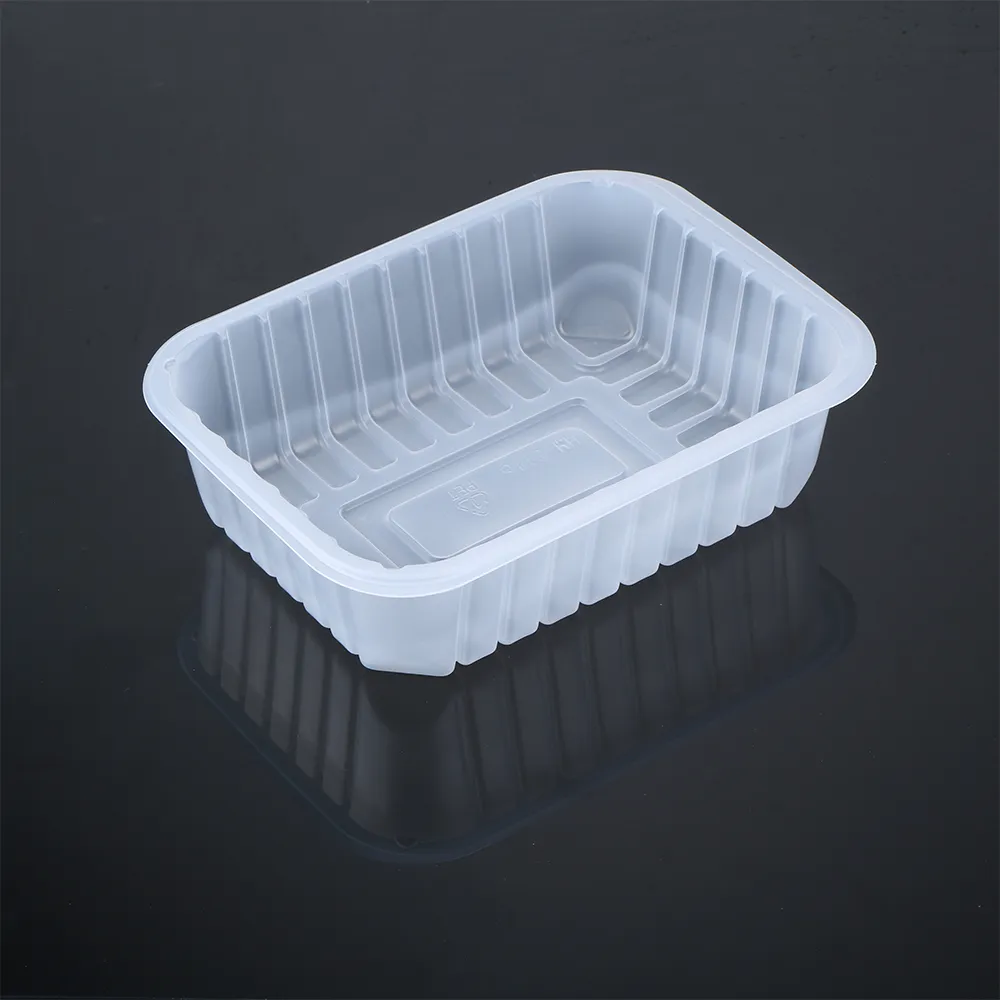
Industrial meat processors, fresh protein brand owners, and commercial food distributors frequently encounter discoloration, purging (drip loss), and premature microbial spoilage during transport and retail display. While standard foam packaging provides basic physical separation, it fails to block gas transfer and moisture migration, leaving fresh meat vulnerable to rapid oxidation and degradation.
Engineered thermoplastic meat trays deliver an impermeable packaging barrier that protects fresh protein against spoilage. This technical breakdown evaluates the polymer physics, Oxygen Transmission Rates (OTR), Water Vapor Transmission Rates (WVTR), and cleanroom production controls required to maximize retail display life and reduce perishable loss.
Barrier Polymer Physics: Controlling Gas Exchange and Drip Loss
Fresh meat deterioration is primarily driven by atmospheric oxidation and moisture evaporation. Controlling these biological mechanisms requires high-density barrier materials engineered to limit gas and water movement across the packaging wall.
Oxygen Transmission Rate (OTR) and Color Stability
Fresh beef, pork, and poultry rely on controlled oxygen levels to maintain visual appeal and slow microbial activity. Excessive oxygen causes lipid oxidation, rancidity, and turns bright red oxymyoglobin into unappealing brown metmyoglobin.
-
Expanded Polystyrene (EPS) Foam: Features high gas permeability (OTR exceeding 2,000 cm³/m²·day·atm), allowing rapid oxygen saturation that degrades meat within 3 to 5 days.
-
Precision PET & PP Trays: Deliver an ultra-dense molecular barrier maintaining an OTR below 0.5 cm³/m²·day·atm under standard refrigeration (2°C to 4°C). This low permeability starves aerobic spoilage bacteria like Pseudomonas spp. and protects structural color stability.
Water Vapor Transmission Rate (WVTR) and Purge Containment
Uncontrolled moisture evaporation leads to surface dehydration, freezer burn, and drip loss that compromises meat texture. High-barrier polypropylene (PP) and polyethylene terephthalate (PET) trays achieve a WVTR under 1.0 g/m²·day, retaining natural juices inside the container. When paired with high-clarity anti-fog lidding films or internal moisture-absorption pads, these trays eliminate fluid pooling and maintain a clean retail display.
Comparative Material Performance for High-Barrier Meat Packaging
Selecting the right polymer matrix depends on the distribution environment, temperature profile, and automated sealing technology.
| Technical Parameter | Polyethylene Terephthalate (PET / rPET) | Polypropylene (PP) | High-Density Polyethylene (HDPE) |
|---|---|---|---|
| Primary Advantage | Exceptional optical clarity & high stiffness | Wide thermal range (-40°C to 120°C) | Superior impact strength & flex resistance |
| OTR Performance | Ultra-Low (< 0.5 cm³/m²·day·atm) | Low (Sustained with EVOH co-extrusion) | Moderate (Requires multi-layer barrier) |
| WVTR Performance | Excellent (< 1.2 g/m²·day) | Superior (< 0.5 g/m²·day) | Exceptional (< 0.3 g/m²·day) |
| Target Application | Premium retail display, clear MAP tray packs | Deep-freeze, ready-to-cook, microwaveable meals | Bulk food-service, heavy primal cuts |
| Sealing Compatibility | Solvent/Heat-seal PET peelable films | Direct heat-seal PP barrier films | Thermal-weld HDPE lidding |
MAP and Vacuum Skin Packaging (VSP) Seal Integrity
A high-barrier tray substrate requires a hermetic flange seal to maintain performance across the cold chain. Any micro-channel or flange defect compromises the protective atmosphere and leads to rapid spoilage.
Gas-Flush MAP Compatibility
Modified Atmosphere Packaging replaces atmospheric air with tailored gas mixtures (e.g., 70% O2 / 30% CO2 for red meat bloom, or 70% N2 / 30% CO2 for poultry). At Hengmaster, thermoformed tray flanges undergo automated optical inspection to verify edge flatness within 0.1 mm tolerances. This precision fit ensures leak-proof heat sealing with barrier lidding films, preventing gas escape during automated high-speed packing lines.
Vacuum Skin Packaging (VSP) Rigidity
In Vacuum Skin Packaging applications, atmospheric pressure presses a warm barrier film directly over the meat cut and onto the tray base. Trays must resist sidewall distortion and corner buckling under vacuum pressure. Thermoformed PP and PET trays with engineered perimeter ribs maintain structural geometry, ensuring reliable vacuum seals without corner crushing or flange deformation.
Cleanroom Manufacturing and Quality Assurance Standards
Producing consistent high-barrier meat trays requires strict cleanroom controls and continuous polymer monitoring to prevent internal voids, thin spots, or surface contamination.
-
ISO 14644-1 Cleanroom Molding: Manufacturing inside Class 100,000 (ISO Class 8) cleanrooms eliminates airborne particulates and airborne oil residues, ensuring clean surfaces for food contact and sealing.
-
Co-Extrusion and Wall Uniformity: Multi-layer sheet extrusion ensures consistent resin distribution across deep-draw tray corners, maintaining certified barrier performance throughout the structure.
-
Leak and Migration Compliance: Trays undergo regular migration analysis in accordance with FDA 21 CFR 177.1520 and EU Regulation (EC) No 1935/2004, confirming zero heavy metal or volatile organic compound (VOC) transfer under low-temperature storage.
Commercial Sourcing Recommendations for Meat Processors
When specifying plastic meat trays for automated packing operations, food processors should verify three critical technical factors:
-
Denesting Efficiency: Confirm that tray sidewalls incorporate precision denesting lugs to eliminate jams on high-speed automated denesting equipment.
-
Anti-Fog and Freezing Stability: Ensure materials maintain impact resistance at sub-zero temperatures (-20°C to -40°C) without brittle cracking during flash freezing.
-
Supply Chain Traceability: Partner with accredited manufacturers holding BRCGS Packaging materials certification and ISO 9001 quality management standards.
For complete technical specifications, custom draw depths, and bulk supply details on high-barrier packaging solutions, explore our certified