
 EN
EN
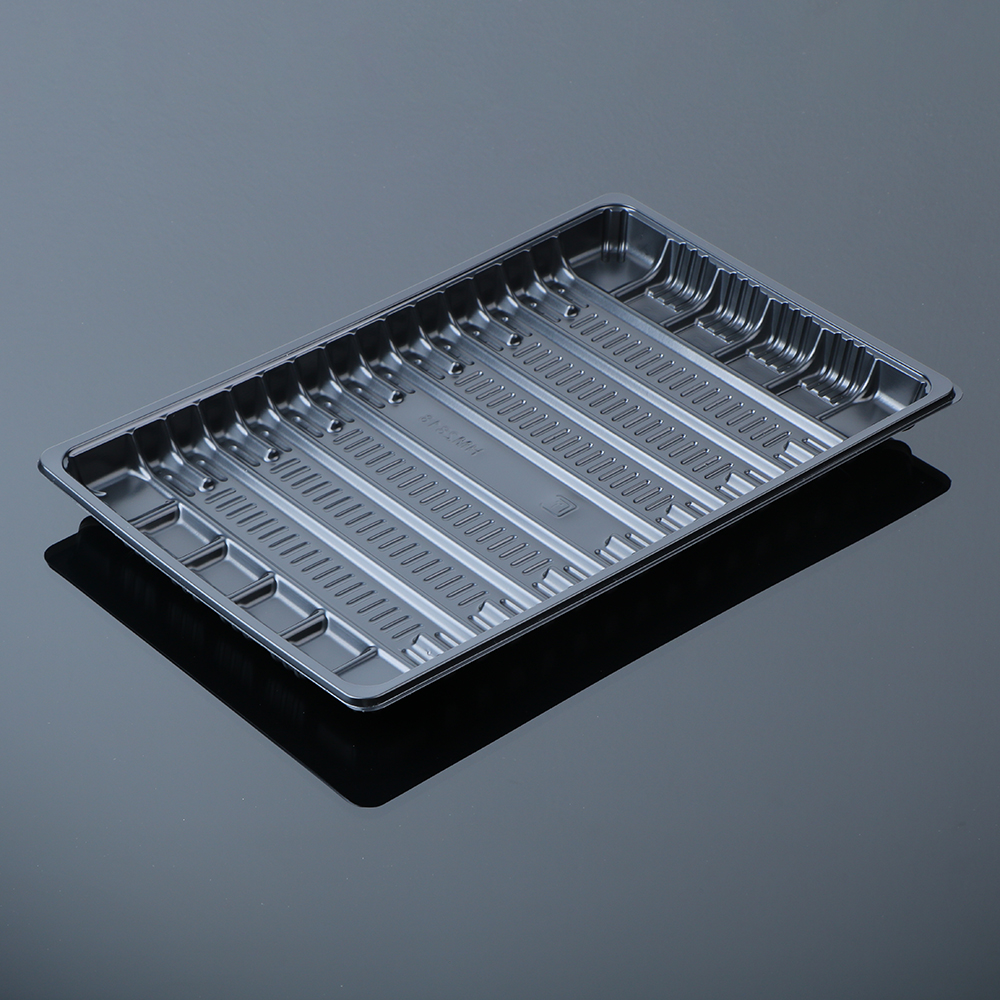
Regulatory Foundations for Plastic Food Tray Compliance
FDA Requirements: 21 CFR Part 177 and Approved Food-Contact Polymers
In the United States, plastic food trays must comply with 21 CFR Part 177, which defines acceptable polymers, additives, and processing aids for indirect food additives. Only substances explicitly listed in the regulation—or those covered by an effective Food Contact Notification (FCN)—may be used. Manufacturers must ensure that finished trays do not impart taste, odor, or toxic substances to food under intended conditions of use. The FDA’s Conditions of Use (A through H) specify maximum temperature exposure and compatibility with food types—such as hot, fatty, acidic, or aqueous—guiding appropriate material selection. Common base polymers like PET, PP, and HDPE are approved for multiple food-contact scenarios and temperature ranges. Good Manufacturing Practices (GMPs) are mandatory to prevent contamination, and documentation—including supplier letters of guarantee—is essential for traceability and regulatory review.
EU Regulation (EC) No. 10/2011: Migration Limits, Authorized Substances, and DoC
In the European Union, Regulation (EC) No. 10/2011 governs all plastic food contact materials, including food trays. It establishes a strict overall migration limit (OML) of 10 mg of total non-volatile substances per square decimeter of surface area (10 mg/dm²) when tested against food simulants. For infant and young children’s products, the limit is tighter: 60 mg/kg of food. Specific migration limits (SMLs) apply to individual substances—for example, bisphenol A (0.05 mg/kg) and primary aromatic amines (not detectable). Crucially, the regulation mandates a Declaration of Compliance (DoC) at every stage of the supply chain. This document must identify the material, confirm adherence to OML and SML requirements, and disclose any use restrictions. As reported by the EU Rapid Alert System for Food and Feed (RASFF), over 92% of certified plastic food trays meet the ≤10 mg/kg overall migration threshold when tested with appropriate simulants—a strong indicator of systemic compliance and safety assurance.
Migration Testing: Scientific Validation of Plastic Food Tray Safety
Simulating Real-Use Conditions: Time, Temperature, and Food Simulants
Migration testing is the empirical cornerstone for verifying that plastic food trays do not transfer harmful substances to food. Accredited laboratories expose tray materials to standardized food simulants—such as 10% ethanol (for aqueous foods), 3% acetic acid (for acidic foods), and vegetable oil or 50% ethanol (for fatty foods)—to replicate real-world food composition. Protocols precisely control contact time and temperature to mirror intended use: from frozen storage (–20°C) to hot-fill or microwave reheating (up to 100°C or higher). Both overall migration (total non-volatile residue) and specific migration of restricted substances are measured. For instance, a tray intended for hot, fatty foods may be tested with 50% ethanol at 70°C for 2 hours—representing a worst-case scenario. This data directly supports the Declaration of Compliance and confirms that chemical transfer remains within toxicologically safe limits for the tray’s designated application.
Material Integrity: Why PET, PP, and HDPE Ensure Hygienic Performance in Plastic Food Trays
The hygienic performance of a plastic food tray hinges on the inherent chemical stability of its polymer matrix. Polyethylene terephthalate (PET) offers a rigid, crystal-clear structure with excellent barrier properties against moisture and gases—minimizing leaching while preserving food quality and sensory integrity. Polypropylene (PP) delivers high heat resistance and low moisture absorption, making it suitable for microwave reheating and stable against degradation from acidic or fatty foods. High-density polyethylene (HDPE) features a dense, linear molecular architecture that resists additive migration; its inert, odorless nature ensures consistent performance across broad temperature ranges. All three polymers are FDA-compliant and widely authorized under EU Regulation (EC) No. 10/2011—making them foundational choices for safe, reliable food packaging.
Verification & Traceability: Certifications, Documentation, and Supply Chain Assurance for Plastic Food Trays
NSF/ISO 22000 vs. Supplier Letters of Guarantee: Rigor, Scope, and Regulatory Weight
For plastic food trays, the difference between NSF/ISO 22000 certification and a Supplier Letter of Guarantee reflects a fundamental distinction in evidentiary rigor. NSF/ISO 22000 involves independent, system-wide audits that verify hazard analysis, preventive controls, material traceability, and ongoing compliance—covering the full manufacturing lifecycle. A Letter of Guarantee, by contrast, is a self-declared statement affirming conformity with food-contact requirements, without third-party validation or test data. While useful as a preliminary assurance, it lacks the structured evidence regulators and major retailers require—particularly where EU Regulation (EC) No. 10/2011 mandates a Declaration of Compliance backed by migration test results. As a result, leading brand owners increasingly prioritize NSF/ISO 22000 certification to meet both supply chain due diligence and global food hygiene standards.
FAQ Section
What is the purpose of migration testing for plastic food trays?
Migration testing ensures that plastic food trays do not transfer harmful substances to food during intended use. It simulates real-world conditions using food simulants, controlled time, and temperature.
What are the FDA’s requirements for plastic food trays?
Plastic food trays must comply with 21 CFR Part 177, which outlines acceptable polymers, additives, processing aids, and FDA Conditions of Use, ensuring they do not alter food taste, odor, or safety.
What is the Declaration of Compliance (DoC) under EU regulations?
The Declaration of Compliance (DoC) is a mandatory document confirming adherence to migration limits, authorized materials, and any applicable use restrictions for plastic food trays in the EU.
Why are PET, PP, and HDPE favored for plastic food trays?
These polymers offer chemical stability, FDA and EU compliance, and resistance to heat, moisture, and degradation, ensuring safe and reliable food contact performance.
How does NSF/ISO 22000 differ from a Supplier Letter of Guarantee?
NSF/ISO 22000 involves third-party audits verifying compliance across the manufacturing lifecycle, while a Supplier Letter of Guarantee is a self-declared statement with no independent validation.
Table of Contents
- Regulatory Foundations for Plastic Food Tray Compliance
- Migration Testing: Scientific Validation of Plastic Food Tray Safety
- Material Integrity: Why PET, PP, and HDPE Ensure Hygienic Performance in Plastic Food Trays
- Verification & Traceability: Certifications, Documentation, and Supply Chain Assurance for Plastic Food Trays
-
FAQ Section
- What is the purpose of migration testing for plastic food trays?
- What are the FDA’s requirements for plastic food trays?
- What is the Declaration of Compliance (DoC) under EU regulations?
- Why are PET, PP, and HDPE favored for plastic food trays?
- How does NSF/ISO 22000 differ from a Supplier Letter of Guarantee?